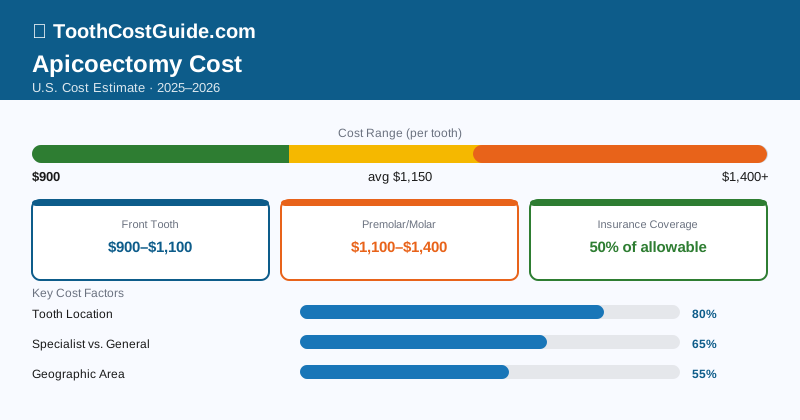
An apicoectomy costs $900–$1,400 without dental insurance in the United States. This oral surgery procedure removes the tip of a tooth’s root (the apex) and seals the end of the root canal to eliminate persistent infection that a standard root canal was unable to resolve. With dental insurance that covers endodontic or oral surgery procedures, your out-of-pocket cost typically falls to $300–$700. The procedure is performed by an endodontist or oral surgeon, and in most cases it’s the last option before tooth extraction.
Apicoectomy Costs by Tooth and Complexity
| Procedure / Tooth Type | Cost (No Insurance) |
|---|---|
| Apicoectomy – front tooth (anterior) | $900–$1,200 |
| Apicoectomy – premolar | $1,000–$1,300 |
| Apicoectomy – molar | $1,100–$1,400 |
| Apicoectomy with bone graft | Add $200–$600 |
| Retrograde filling material (MTA) | Often included |
| Biopsy of periapical tissue | Add $100–$300 |
| Cone beam CT (CBCT) scan (pre-surgical) | $150–$400 |
What Affects the Cost of an Apicoectomy
Which tooth is being treated. Front teeth (incisors and canines) are the least expensive to treat because they have single, straight roots that are relatively accessible from the front of the jawbone. Premolars may have one or two roots. Molars have three or four roots, making the surgical access more challenging and the procedure more time-consuming. Molar apicoectomies cost $100–$200 more than anterior apicoectomies and are less commonly recommended because the difficulty and success rate are less favorable.
Specialist fee. Apicoectomies are almost always performed by endodontists (root canal specialists) or oral and maxillofacial surgeons. Endodontists typically handle the procedure for front teeth and premolars; oral surgeons may handle posterior cases or situations where significant bone surgery is required. Both specialists charge premium fees over general dentists, reflecting their training. Endodontist fees range from $900–$1,300; oral surgeon fees may run $1,000–$1,500.
Whether a bone graft is needed. If infection has destroyed surrounding bone at the root tip, the surgeon may place a bone graft after removing the infected tissue and sealing the root end. This adds $200–$600 to the procedure cost but is necessary to support healing and protect adjacent teeth. Ask upfront whether your case is likely to require grafting.
Pre-surgical imaging. A cone beam CT (CBCT) scan is increasingly standard before apicoectomy. This 3D X-ray shows the precise anatomy of the root and surrounding structures, reducing surprises during surgery. CBCT scans add $150–$400 if not already covered by your diagnosis workup. Some endodontists include this in the procedure fee; others bill separately.
An apicoectomy is almost always a second-line treatment — it’s performed when a previous root canal has failed and retreatment inside the canal is not possible or has already been tried. Before agreeing to an apicoectomy, confirm with an endodontist that root canal retreatment cannot resolve the issue. Retreatment ($900–$1,500) has a similarly high success rate and may be covered more favorably by insurance.
Cost by Complexity and Tooth Position
Single-rooted front teeth (incisors, canines). The most common and most successful apicoectomy cases. The surgical approach is straightforward, with direct access through the thin bone of the upper or lower front jaw. Success rates exceed 85–90% when performed by an experienced endodontist. Cost: $900–$1,200.
Premolars. Moderately complex depending on root count. Upper premolars frequently have two roots, requiring careful identification of each apex. Success rates are similar to anterior teeth. Cost: $1,000–$1,300.
Molars. The most complex and least commonly performed apicoectomies. Multiple roots, greater bone depth, and proximity to anatomical structures (sinus, inferior alveolar nerve) increase surgical difficulty and risk. Not all endodontists will perform molar apicoectomies — some refer these cases for extraction and implant instead. Cost: $1,100–$1,400 when performed.
Cases with significant periapical pathology. When infection has created a large cyst or abscess at the root tip, more tissue removal and likely bone grafting are required. Removed tissue is often sent to a pathology lab for biopsy ($100–$300 additional) to confirm the diagnosis. These complex cases sit at the high end of the cost range.
With vs. Without Dental Insurance
Apicoectomies are typically classified as either endodontic or oral surgery procedures by insurers, each with different coverage rules.
With dental insurance: Most plans that cover root canals also cover apicoectomies as an endodontic procedure. Coverage is typically 50–80% of the allowed fee after your annual deductible ($50–$100). On a $1,100 procedure, insurance paying 50% means you pay $550 plus any deductible. The annual maximum is the key constraint — if you’ve already used significant benefits, the insurer may pay little or nothing.
Pre-authorization importance. Because an apicoectomy is a major procedure with high fees, insurance companies frequently require pre-authorization before they’ll commit to coverage. Your endodontist or oral surgeon should submit X-rays, clinical notes, and a narrative explaining why the apicoectomy is necessary (prior root canal failure, inability to retreat from the crown). Without pre-authorization, you risk the claim being denied or significantly reduced.
Waiting periods. If you recently enrolled in new dental insurance, check the waiting period for “major services” — typically 6–12 months. An apicoectomy may fall under the major restorative or oral surgery category with a waiting period, even if it’s urgent treatment.
HSA/FSA. An apicoectomy is a qualified medical expense eligible for HSA and FSA payment. Paired with insurance, you can pay your copay with pre-tax dollars for an additional effective discount.
Apicoectomies are expensive enough that going in without insurance pre-authorization is risky. Some insurers require that root canal retreatment be attempted before approving an apicoectomy. Have your endodontist document clinically why retreatment is not feasible and submit this with the pre-auth request.
How to Save Money on an Apicoectomy
Get a second opinion before proceeding. Because an apicoectomy is a significant expense and a surgical procedure, a second opinion from another endodontist is worthwhile. A second opinion may reveal that root canal retreatment is actually possible — which would be both less invasive and potentially better covered by insurance.
Ask about retreatment vs. apicoectomy. Root canal retreatment (redoing the root canal from inside the tooth) costs $900–$1,500 and may resolve the infection without surgery. Retreatment success rates are similar to apicoectomy in many cases. Insurance typically covers retreatment at a comparable rate to the original root canal.
Endodontic residency programs. Dental school endodontic residency programs perform apicoectomies at 40–60% reduced fees under attending supervision. The endodontic residents who perform these procedures are licensed dentists completing advanced specialty training. Cost at a university program: $400–$700. Appropriate for patients with time flexibility and straightforward cases.
Compare specialists. Fees vary $200–$400 between endodontic practices in the same market. A free or low-cost consultation at 2–3 offices before committing can reveal meaningful price differences.
Negotiate for uninsured patients. If you have no insurance and are paying out of pocket, ask directly about a cash-pay discount. Many endodontic practices will discount 10–15% for self-pay patients. Combined with a dental school alternative, significant savings are possible.
Financing Options
At $900–$1,400, an apicoectomy is a mid-sized dental expense that many patients finance, especially when it comes on the heels of a root canal and crown that have already consumed their annual benefit.
CareCredit. Accepted at most endodontic offices. Offers 0% promotional financing for 6–24 months. Be aware that deferred interest applies if the balance isn’t cleared before the promotional period ends — retroactive interest at 26–29% APR is charged from the original transaction date.
Alphaeon Credit and Sunbit. Alternative dental financing options with different interest terms. Some practices prefer these over CareCredit. Ask your provider what financing partners they work with.
HSA/FSA payment. The most cost-effective financing approach. An apicoectomy is a fully qualified medical expense. Using pre-tax dollars reduces the effective cost by 22–37% depending on your bracket — better than any financing deal.
In-office payment plans. Many endodontic practices offer 0% interest in-house installment plans for 3–6 months. Ask before enrolling in a third-party credit product — the in-house plan is simpler and usually interest-free.
Bottom Line
An apicoectomy at $900–$1,400 is a significant procedure, but for a tooth worth saving it’s often the right choice over extraction and implant — which would cost $3,000–$5,000. Success rates are high (85–95% for anterior teeth), the procedure is performed under local anesthesia, and recovery takes about a week.
Always confirm the diagnosis and treatment plan with a specialist, get pre-authorization from your insurer, and ask whether retreatment from within the tooth might be an option first. For patients without insurance or near their annual maximum, endodontic residency programs offer the same procedure at dramatically reduced cost.
Dental cost estimates in this guide reflect U.S. national averages for 2024–2025 and may vary significantly by geographic region, provider type, and individual treatment needs. Always request a written treatment plan with itemized costs before agreeing to any dental work. Confirm coverage details directly with your insurance provider before treatment begins.