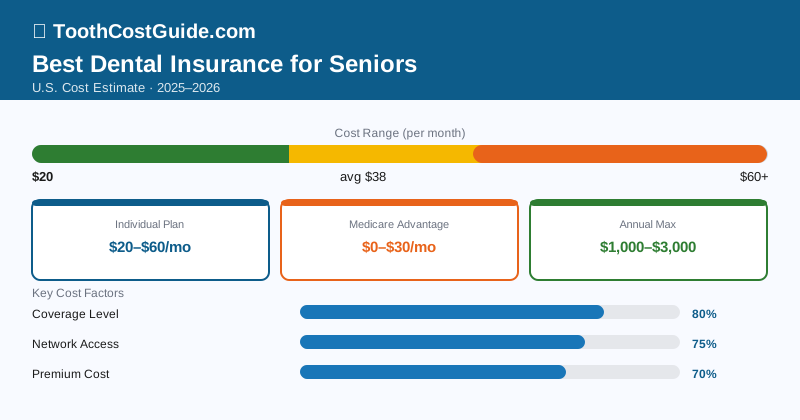
Seniors face the highest dental costs of any age group — with average annual out-of-pocket dental spending of $685 and frequent needs for crowns, bridges, and dentures — yet Medicare provides no routine dental coverage. The right dental insurance plan for a senior can save $1,000–$3,000 per year. Here we compare the top individual dental plans for adults 65+, including AARP/Delta Dental, Humana, Cigna, and Spirit Dental.
| Plan | Monthly Premium | Annual Max | Waiting Period | Best Feature |
|---|---|---|---|---|
| AARP Dental (Delta Dental) Value | $26–$38 | $1,000 | 6–12 months | AARP brand trust, wide network |
| AARP Dental Premier | $40–$52 | $2,500 | Shorter waits | High annual maximum |
| Humana Dental Preventive | $20–$30 | Preventive only | None | Lowest cost |
| Humana Complete | $38–$58 | $1,000–$2,000 | 12 months major | Broad coverage |
| Cigna Dental 1500 | $35–$50 | $1,500 | 6–12 months | Mid-range max |
| Spirit Dental Gold | $33–$45 | $3,000 | None | No wait, high max |
| Spirit Dental Platinum | $45–$57 | $5,000 | None | Best for high needs |
| Medicare Advantage (top plans) | $0–$50 added | $1,500–$3,000 | Usually none | Combined medical/dental |
How to Evaluate Dental Plans as a Senior
Shopping for dental insurance at 65+ requires different priorities than at 35. The features that matter most for seniors:
1. Annual maximum: Seniors are far more likely to need crowns, dentures, and other major work. A $1,000 annual maximum that was adequate at 35 may be consumed by a single crown in retirement. Prioritize plans with $2,000+ maximums.
2. Denture coverage: About 30% of seniors over 65 are edentulous (have no natural teeth) and 36% wear some type of denture. Denture coverage — including both full and partial dentures — is essential for many seniors. Not all plans cover dentures well; check the coverage level and any replacement clauses.
3. Waiting periods: Seniors often have immediate dental needs when they enroll. Plans with waiting periods of 12 months for major work may be less suitable than no-wait plans.
4. Missing tooth clause: Critical for seniors who already have missing teeth. Plans without a missing tooth clause allow coverage for replacement of teeth missing at enrollment.
5. Network breadth: Seniors who winter in Florida or Arizona need a nationwide network that works in multiple states.
6. Medicare Advantage dental comparison: Before buying a standalone plan, evaluate whether switching to a Medicare Advantage plan with comprehensive dental benefits would provide better combined value.
Seniors with known upcoming dental needs — a crown in the next 6 months, dentures being discussed, multiple fillings needed — should choose Spirit Dental Gold/Platinum or a Medicare Advantage plan with comprehensive dental rather than a standard plan with a 12-month wait for major work.
Plan-by-Plan Analysis
AARP Dental Insurance Plans (underwritten by Delta Dental): Available exclusively to AARP members (membership: ~$16/year). Two tiers:
Value Plan: $26–$38/month (varies by state). $1,000 annual maximum. Preventive covered 100% immediately. Basic (fillings): 6-month wait, then 80%. Major (crowns, dentures): 12-month wait, then 50%. Deductible: $50 individual. The Delta Dental network is the largest in the country — 155,000+ dentists.
Premier Plan: $40–$52/month. $2,500 annual maximum. Same waiting period structure but higher max and somewhat better coverage percentages. Ideal for seniors who need more than $1,000/year in dental work.
Pros: Trusted brand, massive network, AARP affiliation provides brand comfort. Cons: Standard waiting periods apply; $1,000 max on the Value plan is low for senior dental needs.
Humana Dental Plans:
Preventive Value ($20–$30/month): Covers only preventive care (cleanings, X-rays, exams). No coverage for fillings, crowns, or dentures. Zero annual maximum for preventive. Best for: seniors in excellent dental health who just want cleanings covered.
Dental Savings Plus (~$10–$15/month): A dental discount plan, not insurance. 15–50% discounts on dental procedures. No claims, no deductibles, no maximums.
Humana Dental Loyalty Plus (~$38–$55/month): No waiting periods for preventive and basic; no waiting period for major in select states. $1,000–$2,000 annual maximum. Good for seniors in states where no-wait major coverage is available.
Complete Dental (~$40–$58/month): Comprehensive coverage; 12-month wait for major work; $1,500–$2,000 annual max. Best for: seniors without immediate major dental needs who want comprehensive eventual coverage.
Cigna Dental:
Cigna Dental 1000 (~$25–$40/month): $1,000 annual maximum. Standard 6-12 month waiting periods. Best for low-medium dental use.
Cigna Dental 1500 (~$35–$50/month): $1,500 annual maximum. 6-month basic, 12-month major wait. Preventive 100%, basic 80%, major 50%. Large 90,000+ in-network dentist network.
Cigna Dental 1500 Plus (~$45–$60/month): $1,500 max with orthodontic coverage ($1,000 lifetime, though less relevant for most seniors). Sometimes available with shorter waiting periods.
Cigna’s network is particularly strong in major metro areas. Good option for urban seniors.
Spirit Dental & Vision:
Spirit Gold ($33–$45/month): No waiting periods for any service. $3,000 annual maximum. 50% major, 80% basic, 100% preventive. No missing tooth clause. Available in all 50 states. Network of 130,000+ dentists.
Spirit Platinum ($45–$57/month): No waiting periods. $5,000 annual maximum. Same coverage percentages. Best for seniors facing extensive dental work in the near term.
Spirit stands out for senior dental insurance for two reasons: no waiting periods (seniors often can’t wait a year) and high annual maximums (seniors often need more than $1,000–$2,000 in any given year).
Medicare Advantage with dental: Compare plans annually on medicare.gov. Top MA plans with dental in 2025 (availability varies by county):
- Some Humana and Aetna MA plans: $0 added premium, $2,000–$3,000 dental benefit
- Some BlueCross BlueShield MA plans: $0–$50 added premium, $1,500–$2,500 dental benefit
- Some UnitedHealthcare MA plans: $0–$25 added premium, $1,000–$2,500 dental benefit
The MA dental benefit is “use it or lose it” each year and doesn’t roll over. Always use your annual dental benefits before December 31.
Pros and Cons
AARP/Delta Dental — Pros: Trusted brand, largest network, AARP membership perks. Cons: Standard waiting periods, $1,000 max on Value plan is low.
Humana — Pros: Multiple plan tiers from preventive-only to comprehensive; large network. Cons: No-wait options limited to select states; standard plans have 12-month major waits.
Cigna — Pros: Good mid-tier option, large urban network. Cons: Standard waiting periods, $1,500 max may be insufficient for complex senior needs.
Spirit Dental — Pros: No waiting periods, no missing tooth clause, high annual maximums ($3,000–$5,000), available everywhere. Cons: Higher premium than comparable waiting-period plans; smaller brand recognition.
Medicare Advantage dental — Pros: Often $0 added premium; combined medical and dental management; some plans cover dentures and implants. Cons: Benefits change annually; network restrictions; many MA plans only offer preventive dental.
How Seniors Save on Dental Costs
Compare Medicare Advantage plans every fall. Plan dental benefits change each year. Use the Medicare Plan Finder at medicare.gov to see every available MA plan in your county, sorted by dental benefit value. If you find an MA plan with $2,000+ in dental benefits and $0 added premium, switching often beats paying $40–$60/month for a standalone plan.
Enroll before you need it. If you’re newly retiring and dental health is currently good, enroll in a comprehensive plan now. Waiting until you need a crown means 12 months of exposure or paying for a no-wait plan at premium prices.
Choose Spirit Dental for known immediate needs. If your dentist has told you that you need a crown, bridge, or dentures within the next 6 months, Spirit Gold’s combination of no waiting period + $3,000 annual max is the best option financially.
Use dental schools for dentures and implants. For procedures costing $2,000–$5,000+, dental schools provide the same quality at 40–60% less. Even with insurance, the reduced base cost lowers your net out-of-pocket significantly.
Maximize annual benefits before year-end. Whatever plan you have, schedule any remaining covered procedures before December 31 to use your full annual maximum. Benefits don’t roll over.
Many dental insurers limit coverage for seniors in subtle ways — “first-year maximums” that cap benefits at $500 in year one even if the stated maximum is $2,000, or “progressive coverage” that starts at 15% and reaches full 50% only in year three. Read the actual plan documents, not just the marketing summary, before enrolling.
For most seniors, the best dental insurance is either (1) a Medicare Advantage plan with $1,500–$3,000 in comprehensive dental benefits at $0 added premium, or (2) Spirit Dental Gold/Platinum for immediate coverage with no waiting periods and annual maximums of $3,000–$5,000. AARP and Humana are solid mid-tier choices for seniors with stable dental health who can tolerate standard waiting periods.
Bottom Line
Seniors need dental insurance with higher annual maximums, shorter or no waiting periods, and strong denture/implant coverage — criteria that eliminate many budget plans. Spirit Dental’s Gold and Platinum plans lead for seniors with immediate needs or high dental use. AARP/Delta Dental’s Premier plan offers the best combination of brand trust and high maximum ($2,500) for seniors who can tolerate standard waiting periods. Medicare Advantage plans with comprehensive dental are the most cost-efficient option when available — compare MA plans every fall during open enrollment to find the best dental value in your county.