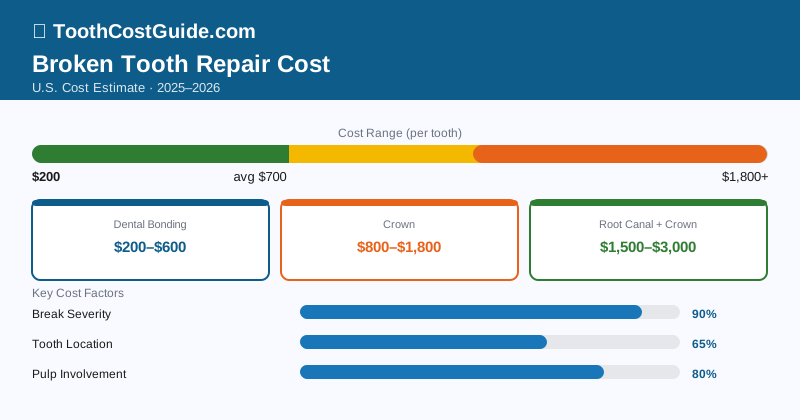
Broken tooth repair costs $200–$600 for a minor chip treated with dental bonding, and $1,000–$1,800 for a more severe break requiring a crown. If the break extends into the pulp (nerve), you’ll also need a root canal ($700–$1,500), bringing the total to $1,700–$3,300. The severity of the break — not just its size — determines which treatment is needed and what you’ll pay.
| Break Severity | Typical Treatment | Cost (No Insurance) |
|---|---|---|
| Minor chip (enamel only) | Dental bonding | $200–$600 |
| Medium chip/fracture | Porcelain veneer | $800–$2,000 |
| Broken cusp (no nerve exposure) | Dental crown | $1,000–$1,800 |
| Fracture into pulp (nerve exposed) | Root canal + crown | $1,700–$3,300 |
| Vertical root fracture | Extraction | $150–$600 |
| Emergency exam + X-rays | Diagnosis | $100–$250 |
What Affects the Cost
Location and extent of the fracture. Dental fractures are classified into five categories. A craze line (surface crack, no treatment needed), an enamel chip (bonding), a fractured cusp (crown), a cracked tooth reaching the pulp (root canal + crown), and a split tooth or vertical root fracture (extraction). Where the fracture line stops determines the treatment and cost.
Which tooth is broken. Front teeth (incisors and canines) are commonly repaired with bonding or veneers for cosmetic reasons. Back molars that bear heavy chewing force typically require crowns. Root canals on front teeth cost $700–$900; molars cost $1,000–$1,500.
Whether the nerve is involved. This is the critical cost jump. A fracture that hasn’t reached the pulp chamber is treated with a crown alone. One that reaches the pulp requires root canal therapy first, adding $700–$1,500 to the bill. You can’t know this for certain without an X-ray and sometimes additional tests.
Urgency. Emergency or same-day appointments for a broken tooth often carry an emergency exam fee of $50–$150. Weekend and after-hours appointments carry surcharges of $100–$300.
Material chosen for the crown. All-ceramic (zirconia or lithium disilicate) crowns cost $1,200–$1,800. Porcelain-fused-to-metal (PFM) crowns run $1,000–$1,500. All-metal gold crowns are $1,300–$2,500 but far more durable. Temporary crowns used while awaiting a permanent crown typically cost $100–$300.
Treatment Options & Costs
Dental bonding ($200–$600): Composite resin applied and sculpted directly to the tooth to restore shape and appearance. No anesthesia required in most cases. Completed in a single appointment. Ideal for small chips on front teeth. Lasts 5–10 years before needing touch-up or replacement. This is the cheapest repair option.
Porcelain veneer ($800–$2,000): A thin ceramic shell bonded to the front surface of the tooth. More durable and stain-resistant than bonding. Requires slight enamel removal. Two appointments required (impression and fabrication). Best for front teeth with moderate chips or cosmetic concerns alongside the fracture.
Dental crown ($1,000–$1,800): Caps the entire visible tooth. Required when the fracture compromises structural integrity and a filling or bonding won’t hold. Crowns protect the remaining tooth structure and restore full chewing function. Two appointments: first to prepare and take impressions, second to cement the permanent crown.
Root canal + crown ($1,700–$3,300): When the fracture exposes or infects the pulp, root canal treatment must come first. The endodontist (or general dentist) removes infected tissue, cleans the canals, and seals them. A crown is placed a week or two later. This is the treatment path for any fracture causing severe spontaneous pain, swelling, or pain from biting.
Tooth extraction ($150–$600): For vertical root fractures or teeth too damaged to save, extraction is the final option. The gap must eventually be replaced with a bridge ($3,000–$5,000) or implant ($3,500–$6,000).
With vs. Without Insurance
- Dental bonding: Covered at 40–80% if deemed restorative (not purely cosmetic); ask your plan before assuming coverage
- Crown: Covered at 40–60% under major restorative; many plans have a 6–12 month waiting period for crowns on new policies
- Root canal: Covered at 40–60%; specialist (endodontist) fees may be higher than in-network general dentist fees
- Extraction: Covered at 75–90% for simple; 50–75% for surgical
- Annual maximum: Most plans cap at $1,000–$2,000/year; root canal + crown can exhaust your entire annual benefit on one tooth
With insurance example (crown + root canal = $2,800):
- Insurance pays 50% = $1,400
- Deductible: $100
- Patient pays: ~$1,500
What To Do With a Broken Tooth
- Rinse with warm water to clean the area. Apply gentle pressure with gauze if bleeding.
- Save any large tooth fragments in milk or saliva — the dentist may be able to bond them back.
- Cover sharp edges. Temporary dental cement (available at pharmacies for $10–$20) or even sugar-free gum can cover a sharp edge until your appointment.
- Call your dentist the same day if you have pain, exposed nerve (extreme sensitivity), or swelling. A broken tooth with no pain can often wait 1–2 days for a regular appointment.
- Avoid chewing on the broken side. Stick to soft foods and avoid temperature extremes.
- Take OTC pain relief — ibuprofen (400–600 mg) works better than acetaminophen for dental pain due to its anti-inflammatory action.
How to Save Money
Act before infection develops. A broken tooth that isn’t causing pain yet should still be seen within days — an unprotected exposed dentin or pulp will become infected, turning a $1,200 crown into a $3,000 root canal + crown case.
Ask about bonding vs. crown for small breaks. For a moderate fracture, some dentists may offer bonding as a temporary or permanent fix. It costs less but may not last as long. Get the dentist’s honest assessment of longevity.
Dental school clinics. Crowns at dental schools run $400–$700 — 40–60% less than private practice. Root canals cost $300–$600. The trade-off is time; appointments take longer.
Check your dental plan’s waiting period. If you just enrolled in dental insurance, check whether your plan has a waiting period for major restorative work. If it does, the broken tooth may be treated before the waiting period ends — understand what you’ll owe.
A broken tooth with severe pain, swelling, or visible pus is infected and requires urgent care. Do not delay seeking treatment — dental infections can spread to the jaw, neck, or airway and become life-threatening. A tooth that “stopped hurting” after a fracture may indicate nerve death, not healing. See a dentist promptly.
Bottom Line
Broken tooth repair ranges from $200–$600 for a simple chip fixed with bonding to $1,700–$3,300 for a fracture requiring root canal and crown. Seeing a dentist quickly — before infection develops — keeps you in the lower-cost treatment categories. Dental schools and discount plans cut costs by 40–60% for uninsured patients. The size of the break matters less than how deep it goes: enamel chips are cheap to fix; fractures into the nerve are expensive.