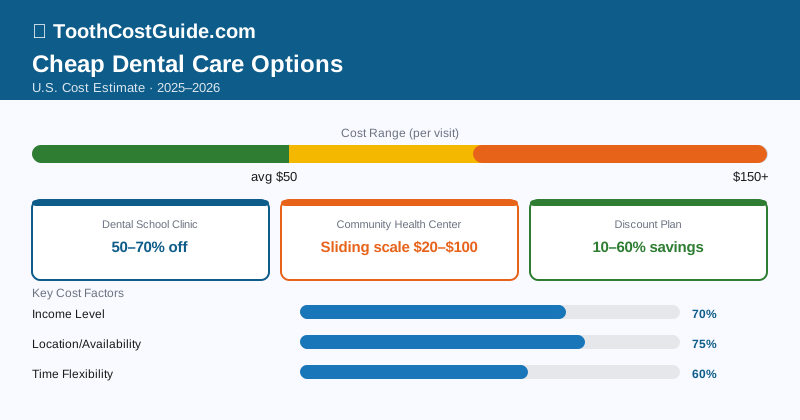
The average American without dental insurance pays full price for dental care that can cost $300–$6,000+ out of pocket for common procedures. But there are multiple legitimate, high-quality options to reduce dental costs by 40–70% — without traveling abroad, without sacrificing clinical quality, and without waiting months for care. Here’s every option, how each works, and who each is best for.
| Option | Discount vs. Private Practice | Wait Time | Quality |
|---|---|---|---|
| Dental school clinics | 40–70% less | Days to weeks | Supervised, high-quality |
| Community health centers (FQHCs) | Sliding scale, income-based | Days | Qualified licensed dentists |
| Dental discount plans | 10–60% less | Immediate | Same dentists, lower fee |
| In-office membership plans | 15–40% less | Immediate | Same dentist, bundled care |
| Government/VA dental programs | Free to reduced cost | Varies | High quality |
| Medicaid (eligible patients) | Free (mostly) | Days | Licensed providers |
| Negotiated cash price | 5–20% less | Immediate | Same dentist |
| Dental tourism (Mexico/abroad) | 50–80% less | Trip required | Highly variable |
Option 1: Dental School Clinics (Best Overall Savings)
Accredited dental school clinics offer the deepest discounts on the widest range of services — 40–70% below private practice fees. The work is performed by dental students in their final 1–2 years of training, supervised directly by licensed faculty dentists.
How it works: You’re assigned to a dental student who has already completed 2 years of classroom and laboratory training. That student performs all procedures under direct supervision of a faculty dentist who examines the work at every step. For complex procedures, the faculty may actually step in.
What you save:
- Routine cleaning: $35–$75 (vs. $100–$200 at private practice)
- Crown: $400–$700 (vs. $800–$1,800)
- Root canal (molar): $500–$900 (vs. $1,000–$1,800)
- Dental implant: $1,500–$3,000 (vs. $3,000–$6,000)
- Full dentures: $1,200–$2,500 (vs. $3,000–$8,000)
The tradeoff: Appointments are longer — often 2–3 hours for procedures that take 45–60 minutes in private practice. Multiple appointments may be needed where a private office does it in one. You may not see the same student twice.
How to find one: Go to adea.org (American Dental Education Association) for a complete list of accredited U.S. dental schools. Search “[city] dental school clinic” or call your nearest dental school and ask about public patient care hours.
Dental schools are not a last resort — they’re a legitimately excellent choice. Many dental school patients continue using their assigned student for years because they receive thorough, supervised care at dramatically reduced cost. Faculty are practicing clinicians who review and approve every treatment step.
Option 2: Federally Qualified Health Centers (FQHCs)
Federally Qualified Health Centers are federally funded community health centers that must by law offer dental care on a sliding-scale fee based on income.
How the sliding scale works: Your fee is calculated based on income as a percentage of the Federal Poverty Level (FPL). At or below 100% FPL (approximately $15,000/year for an individual in 2025), dental care may cost $20–$40 per visit. At 200% FPL, fees are 50–60% of standard rates. Above 200%, you pay a reduced but not income-adjusted fee.
Services offered: Most FQHCs offer routine cleanings, exams, fillings, extractions, and basic restorative work. Complex specialty procedures may be limited. Emergency dental care is often available on short notice.
How to find one: Go to findahealthcenter.hrsa.gov and enter your zip code. There are over 1,400 FQHC organizations with 14,000+ service delivery sites nationwide.
Who qualifies: FQHCs serve everyone, but the sliding-scale fees are income-based. Uninsured patients of any income level are seen; the fee scale primarily benefits lower-income patients.
Option 3: Dental Discount Plans
Dental discount plans (covered in depth in our dental discount plans guide) charge $80–$200/year and offer 10–60% off dental fees at participating dentists.
Key advantages over insurance:
- No waiting periods — activate and use same week
- No annual maximums — discounts apply to all treatment, including major procedures
- No claim forms or reimbursement hassles
- Cosmetic procedures included (insurance never covers these)
Best for: Uninsured adults who need routine care and occasional fillings; anyone who needs a fast coverage solution without waiting for insurance benefits to vest.
Option 4: Negotiate a Cash or Self-Pay Discount
This option is underused and surprisingly effective. Many dental offices — particularly private practices that do their own billing — will reduce fees by 5–20% for patients who pay in full at the time of service.
Why it works: Insurance billing involves administrative overhead, delayed payments (30–90 days), claim denials, and appeals. A patient who pays $200 cash today is genuinely more valuable to many offices than collecting $200 from an insurance company over 60 days.
How to ask: Call the dental office before your appointment and say: “I’m a self-pay patient — do you offer any discount for paying at time of service?” Or at the appointment: “I’ll be paying out of pocket today. Is there a cash or self-pay rate?”
Some offices advertise this explicitly; most don’t. But the question is almost always welcome.
Ask for an itemized fee estimate before any dental appointment. Knowing exactly what each procedure code costs allows you to compare prices between offices and identify any add-on services you may not need or want. Dental offices are required to provide written estimates on request.
Option 5: State and Federal Programs
Medicaid dental coverage: Medicaid covers dental care for eligible low-income adults in approximately 30 states (as of 2025). Coverage quality varies enormously by state — some states cover only emergency extractions, while others cover comprehensive care including crowns and dentures. Check your state’s Medicaid dental benefit scope at your state Medicaid office or NASHP.org.
CHIP (Children’s Health Insurance Program): Covers comprehensive dental care for children in families earning too much for Medicaid but unable to afford private insurance. Highly valuable — includes cleanings, fillings, extractions, and sometimes orthodontics.
VA Dental Program: Veterans with certain disability ratings or other qualifying conditions receive free comprehensive dental care through VA dental clinics. Veterans who don’t qualify for free VA dental can access VADIP — a dental insurance program with competitive rates. Contact your nearest VA medical center.
Indian Health Service (IHS): American Indians and Alaska Natives eligible for IHS receive dental care at no cost through IHS dental clinics. Services are comprehensive but access varies by location.
Option 6: In-Office Practice Membership Plans
Many dental practices now offer their own annual membership plans as an alternative to traditional dental insurance. A typical plan:
- Annual fee: $99–$400/year
- Includes: Two cleanings, annual X-rays, periodic exam
- Discount: 10–25% off all other treatment at that practice
Best for: Established patients who trust and prefer a specific dentist and want to simplify their dental expense management. The bundled cleanings + exam alone often justify the plan cost.
Who Should Use Which Option?
Low-income, uninsured: FQHC first (sliding scale, most accessible); dental school for complex work.
Working adult, no employer dental benefits: Dental discount plan + dental school for major work.
Has dental insurance with high copays: Negotiate; use FSA/HSA; ask about predetermination before major work.
Child without dental coverage: CHIP enrollment first; FQHCs as backup.
Senior without dental coverage: Medicare does not cover routine dental (as of 2025). Options: dental discount plan, dental school, FQHC, or Medicare Advantage plan with dental benefits.
Financing Options
Even with discounts, unexpected dental costs happen. The most important financing resources:
CareCredit: 0% promotional financing for 6–24 months at most dental offices. Useful for remaining balances after discounts.
FSA/HSA: Pre-tax accounts that reduce the effective cost of all dental care by 22–37% depending on your tax bracket. Maximize contributions in years you anticipate major dental work.
Payment plans: Most dentists will arrange installment payments for established patients on large bills. Ask explicitly — it’s not always advertised.
Bottom Line
Quality dental care is available at dramatically reduced cost through multiple well-established channels. Dental schools provide 40–70% savings with faculty-supervised quality. FQHCs serve everyone on a sliding scale. Discount plans cost $99/year and eliminate waiting periods. Negotiating a cash rate saves 5–20% immediately.
The worst approach is avoiding dental care entirely because of cost concerns — small problems become expensive emergencies. Use the options in this guide to stay current with care at a price that fits your budget.
Always get a written treatment plan before agreeing to any dental work. Regardless of the cost-saving option you use, you are entitled to a complete written estimate of proposed treatment, including each procedure code, before treatment begins. Request this at dental schools, FQHCs, and private practices alike.