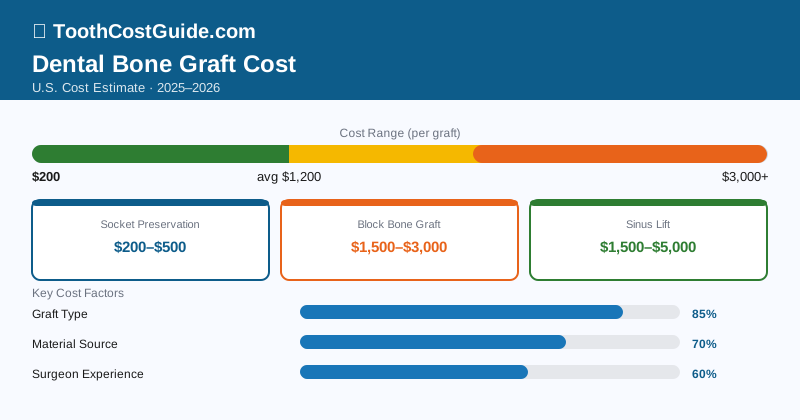
A dental bone graft costs $200–$3,000 depending on the size of the defect, the type of graft material used, and whether a specialist or general dentist performs the procedure. Socket preservation grafts placed after a simple tooth extraction are on the lower end ($200–$600). Larger grafts to rebuild significant bone loss before implants — including ridge augmentation and sinus lifts — can cost $1,500–$3,000 or more per site. Most dental insurance plans do not cover bone grafts, particularly when they’re for implant preparation, but medically necessary grafts related to trauma or disease may have partial coverage.
Bone Graft Types and Their Costs
| Graft Type | Cost Per Site (No Insurance) |
|---|---|
| Socket preservation (post-extraction) | $200–$600 |
| Ridge augmentation (minor) | $600–$1,500 |
| Ridge augmentation (major / block graft) | $1,500–$3,000 |
| Sinus lift (lateral window, one side) | $1,500–$2,500 |
| Sinus lift (crestal / internal, minor) | $600–$1,200 |
| Periodontal bone graft (single site) | $600–$1,200 |
| Bone graft membrane (barrier membrane) | $150–$350 additional |
What Affects the Cost of a Dental Bone Graft
Size and location of the defect. A simple socket preservation graft — placing graft material into an empty extraction socket to prevent bone resorption — is among the smallest bone graft procedures and costs the least. Rebuilding a large ridge that has atrophied significantly, or augmenting the posterior upper jaw where the sinus floor has descended, requires more material, more surgical time, and more complex techniques. These larger procedures cost proportionately more.
Graft material type. There are four main material categories: autografts (your own bone, harvested from your jaw, chin, or hip), allografts (donated human bone from a tissue bank), xenografts (typically bovine or equine bone that has been processed), and alloplasts (synthetic materials). Autografts are considered the gold standard for healing but require a separate surgical site and are less common for routine grafting. Most dentists today use allografts or xenografts, which cost $200–$600 for the graft material itself — a fee often included in the procedure cost. Specialty synthetic materials like recombinant bone morphogenetic protein (rhBMP-2) are used in complex cases and add significant cost.
Specialist vs. general dentist. Oral surgeons and periodontists routinely charge more than general dentists for the same procedure, reflecting their specialty training. A socket preservation performed by a general dentist may cost $250–$400, while the same procedure with an oral surgeon runs $400–$600. For complex augmentation procedures, specialist performance is typically necessary and worth the premium.
Whether a membrane is needed. Barrier membranes (resorbable or non-resorbable collagen or titanium sheets) are placed over the graft site to guide bone regeneration and keep soft tissue from growing into the graft. Most bone graft procedures include a membrane charge of $150–$350 on top of the base graft fee. Ask whether the quoted price includes the membrane.
The bone graft fee you’re quoted almost always covers just one site. If you need grafts at multiple locations — for example, preserving sockets at two extraction sites, or bilateral sinus lifts — each site is billed separately. A full mouth implant workup can include $2,000–$6,000 in grafting costs before a single implant is placed.
Cost by Graft Type and Complexity
Socket preservation graft. Placed immediately after tooth extraction to maintain the bone volume needed for a future implant. Without grafting, the jawbone naturally resorbs 25–50% of its width in the first year after extraction. Cost: $200–$600. Considered a standard upcharge when a tooth is extracted with implant plans in mind.
Ridge augmentation. Used when bone loss has already occurred — either from long-standing tooth absence, previous infection, or trauma. Minor ridge augmentation adds a small amount of bone width or height. Major ridge augmentation (block grafting) harvests a section of bone from elsewhere in the jaw and screws it in place, requiring a more involved surgery and 3–6 months of healing. Cost: $600–$3,000 depending on severity.
Sinus lift (sinus augmentation). The upper back molars sit directly below the sinus floor. When these teeth are lost, the sinus descends into the space, leaving insufficient bone for implants. A lateral window sinus lift creates a small access opening in the sinus wall, lifts the sinus membrane, and packs graft material below it. It’s a specialty procedure often performed by oral surgeons or periodontists. Cost: $1,500–$2,500 per side. An internal (crestal) sinus lift is a less invasive approach used when only a small amount of additional bone height is needed: $600–$1,200.
Periodontal bone graft. Used to treat bone loss caused by gum disease around an existing tooth. A periodontist cleans the root surface and places bone graft material to encourage regeneration of lost bone. Cost: $600–$1,200 per site. Unlike implant-preparation grafts, these may have partial insurance coverage if the underlying periodontal disease diagnosis is documented.
With vs. Without Dental Insurance
Insurance coverage for dental bone grafts is inconsistent and often limited. The key question is the purpose of the graft.
Grafts for implant preparation: Almost never covered. Dental implants themselves are excluded from most insurance plans, and preparatory procedures including bone grafts, sinus lifts, and ridge augmentation are also excluded when their purpose is to enable implant placement.
Grafts for periodontal disease treatment: May be partially covered. If your periodontist documents significant bone loss from periodontitis and recommends osseous surgery with bone grafting, some plans cover 50–80% of periodontal surgical procedures after deductible. The bone graft material itself may or may not be a covered line item — check your plan’s periodontal benefits specifically.
Grafts following trauma or pathology: May have medical or dental insurance coverage. Reconstruction after oral cancer surgery, jaw fracture, or cyst removal may involve medical insurance rather than (or in addition to) dental insurance. This is worth investigating with your oral surgeon’s billing department.
Before any bone graft procedure, ask your provider to submit a pre-authorization to your insurer with X-rays and a narrative explaining the medical necessity. Even if the procedure ultimately isn’t covered, you’ll receive a written determination before treatment rather than a surprise bill afterward.
How to Save Money on a Dental Bone Graft
Ask whether socket preservation is necessary. If you’re having a tooth extracted and aren’t certain about getting an implant, discuss with your dentist whether socket preservation is truly worthwhile in your specific case. For back teeth where an implant is unlikely, the $200–$600 socket preservation graft may not be the best use of your money.
Get a second opinion on graft type. Different surgeons favor different graft materials and techniques. An opinion from a second oral surgeon or periodontist may reveal a less costly approach to achieving the same goal. This is especially valuable for large augmentation cases quoted at $2,000 or more.
Dental and oral surgery schools. Dental schools and oral surgery residency programs perform bone grafts at significantly reduced fees — often 40–60% below private-practice rates. The procedures are performed by residents under close attending supervision. This is a legitimate option for less urgent cases where you have flexibility on timing.
Negotiate with your provider. Many oral surgeons and periodontists will reduce fees for patients paying entirely out of pocket. Ask directly: “Is there a cash-pay discount?” Savings of 10–20% are common.
Combine procedures. If you need both an extraction and a socket preservation graft, having them done simultaneously saves a separate surgical fee compared to returning for the graft later. Similarly, if you need sinus lifts on both sides, doing them in a single surgical session reduces total OR time costs.
Financing Options
Bone grafts are mid-to-large dental expenses that most patients finance, especially when they’re a stepping stone to implants.
CareCredit and Alphaeon Credit. These dental financing cards offer promotional 0% interest periods of 6–24 months depending on the amount financed. CareCredit is accepted at most oral surgery and periodontal practices. Avoid carrying a balance past the promotional period — retroactive interest charges at 26–29% APR will be applied from the original transaction date.
In-house payment plans. Oral surgery practices often offer their own payment plans, sometimes 0% for 3–6 months. For patients with a good payment history at the practice, this is the simplest option. Ask the front office before signing up for a third-party financing product.
HSA/FSA funds. Dental bone grafts are qualified medical expenses under HSA and FSA plans. If you have these accounts, use them to pay — pre-tax dollars provide an effective 22–37% cost reduction depending on your tax bracket.
CareCredit + implant package pricing. Many implant-focused practices offer all-inclusive pricing for extraction, graft, implant, and crown as a package. The bundled price is often 10–15% less than paying for each component separately, and it’s easier to finance one number than four separate bills.
Bottom Line
Dental bone grafts range from $200 for a simple socket preservation to $3,000 for a complex ridge augmentation or sinus lift. They’re a necessary prerequisite for many dental implants and are sometimes needed to treat advanced gum disease. The cost is significant — and almost never covered by insurance for implant purposes — but the alternative of skipping the graft and losing the ability to place an implant later can be far more costly.
Always get a full written treatment plan that itemizes each procedure, material cost, and whether a membrane is included. Ask your provider whether the quote covers just one site or multiple, and confirm what happens to the cost if the procedure turns out to be more complex than anticipated once surgery begins.
Dental cost estimates in this guide reflect U.S. national averages for 2024–2025 and may vary significantly by geographic region, provider type, and individual treatment needs. Always request a written treatment plan with itemized costs before agreeing to any dental work. Confirm coverage details directly with your insurance provider before treatment begins.