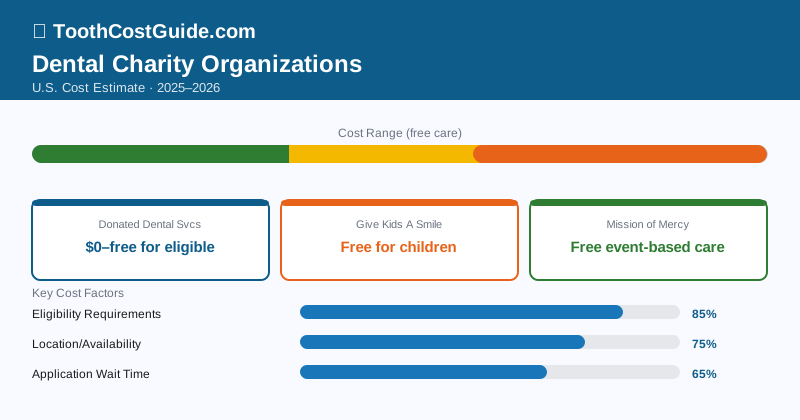
National dental charities provide free or heavily subsidized care worth $300–$5,000+ to Americans who cannot afford treatment — including the elderly, disabled, children, veterans, and the working poor. Unlike one-day events, many of these organizations provide comprehensive, ongoing care through networks of volunteer dentists across all 50 states.
| Organization | Who They Serve | Services | Avg. Value of Care |
|---|---|---|---|
| Dental Lifeline Network (DDS) | Elderly, disabled, medically fragile | Comprehensive, ongoing | $2,500–$5,000 |
| Give Kids A Smile (ADA Foundation) | Children 0–18 | Preventive, restorative | $200–$600/event |
| America’s ToothFairy | Children with no/limited insurance | Preventive, urgent care | $150–$500 |
| Dentistry From The Heart | Adults, any income | Basic care (1-day events) | $200–$800 |
| United Way 2-1-1 Dental Referrals | Low-income adults & families | Varies by referral | Varies |
| Smiles for Everyone Foundation | Low-income patients | Preventive, restorative | $200–$1,000 |
| Mission of Mercy (state chapters) | Uninsured/underinsured | Comprehensive (1-day) | $500–$3,000 |
| Foundation for Oral Health | Rural and underserved communities | Varies by program | $300–$2,000 |
How It Works
Dental charity organizations work through several models:
Volunteer dentist networks: Organizations like Dental Lifeline Network recruit licensed dentists who agree to provide free care to qualifying patients. When an eligible patient is matched with a volunteer dentist, the dentist absorbs the full cost of treatment through their own practice.
Event-based clinics: Groups like Dentistry From The Heart and Mission of Mercy organize large one-day or weekend events where volunteer dental teams set up portable equipment and treat hundreds of patients.
Grant-funded programs: America’s ToothFairy and similar organizations fund safety-net dental clinics that serve children in underserved communities, with care provided at little or no cost.
Referral networks: United Way’s 2-1-1 helpline (dial 2-1-1 from any phone) connects callers with local dental resources including low-cost clinics, volunteer dentists, and financial assistance programs.
Costs & Savings Details
Dental Lifeline Network / Donated Dental Services (DDS): This flagship program has provided over $600 million in free dental care since 1985. Qualifying patients receive comprehensive care — not just extractions but full treatment plans including crowns, dentures, bridges, and implants in some cases. Average care value: $2,500–$5,000 per patient.
Give Kids A Smile: Since 2003, over 6 million children have received free dental care. At events, children typically receive: oral exam, X-rays, cleaning, fluoride treatment, and any urgent restorative work. Per-child value: $200–$600.
America’s ToothFairy: Partners with ~400 safety-net dental clinics to provide care for children from low-income families. Grants from the organization help clinics reduce or eliminate patient fees.
Dentistry From The Heart: Free one-day events held in cities nationwide throughout the year. Services include extractions, fillings, and cleanings — all at no cost. Find events at dentistryfromtheheart.org.
Eligibility / Who Qualifies
Eligibility requirements by organization:
Dental Lifeline Network DDS Program:
- Age 65 or older, OR
- Have a permanent disability, OR
- Be medically compromised (serious systemic illness making dental treatment a risk), AND
- Be unable to afford dental care (income documentation required)
Give Kids A Smile:
- Children ages 0–18
- Priority for uninsured and underserved children
- No income test at most events; some require Medicaid/CHIP enrollment
America’s ToothFairy:
- Children at or below 200% of the federal poverty level
- No dental insurance or limited Medicaid dental
Dentistry From The Heart events:
- Open to anyone; no income test
- First-come, first-served at event sites
Mission of Mercy:
- Uninsured or underinsured
- Priority for low-income patients
- First-come, first-served at events
Smiles for Everyone Foundation:
- Low-income adults and children
- Application required; income documentation needed
Pros and Cons
Pros
- Completely free — no repayment required
- Some programs provide comprehensive care, not just emergency treatment
- Available in all 50 states
- Many programs don’t require insurance or good credit
- Dental Lifeline Network matches patients with their own volunteer dentist for continuity of care
Cons
- Waitlists can be long (6–18 months for Dental Lifeline Network DDS in some states)
- One-day events require early arrival and may not address all needs in a single visit
- Eligibility requirements exclude many working adults who are uninsured but not elderly or disabled
- Geographic availability varies — rural areas have fewer options
The Dental Lifeline Network DDS program often has waitlists. Apply as early as possible. While waiting, ask your state dental association about interim free clinic events that can address urgent needs.
Step-by-Step Guide
Identify which program fits your situation: Use this guide’s eligibility section to match your circumstances to the right organization. Elderly or disabled? Apply to DDS. Have kids? Look for Give Kids A Smile events and America’s ToothFairy clinics. Need urgent care soon? Find a Dentistry From The Heart or Mission of Mercy event.
Apply to Dental Lifeline Network: Visit dentallifeline.org and click “Get Dental Care.” Find your state’s affiliate and complete the application. You’ll need to provide income documentation, proof of age or disability, and medical history.
Find Give Kids A Smile events: Visit adafoundation.org/gkas or ask your child’s pediatrician or school nurse about upcoming events in your area.
Search America’s ToothFairy clinics: Visit americastoothfairy.org and use the clinic locator. Call the clinic to ask about income requirements and scheduling.
Dial 2-1-1: Call or text 211 from any phone or visit 211.org. Tell the operator you need dental care assistance. They will connect you with local resources including free clinics and dental charities in your area.
Check your state dental association: Every state has a dental association that coordinates charitable programs. Search “[State] Dental Association charitable care” for a list of programs and events.
Watch for Dentistry From The Heart events: Sign up for email notifications at dentistryfromtheheart.org to get notified of upcoming free events near you.
Dental Lifeline Network’s DDS program is the most comprehensive free dental program in the country for elderly and disabled Americans — yet it’s dramatically underutilized. Over 15,000 volunteer dentists participate nationwide. If you’re 65+ or permanently disabled and can’t afford dental care, this should be your first call: 720-274-3200.
Bottom Line
National dental charity organizations collectively provide hundreds of millions of dollars in free care each year, but most Americans don’t know they exist. Start with Dental Lifeline Network if you’re elderly or disabled, Give Kids A Smile or America’s ToothFairy for children, and 2-1-1 referrals for adults of any age. For urgent care with no eligibility requirements, find the next Dentistry From The Heart or Mission of Mercy event in your area. Free care exists — you just need to find and apply for it.