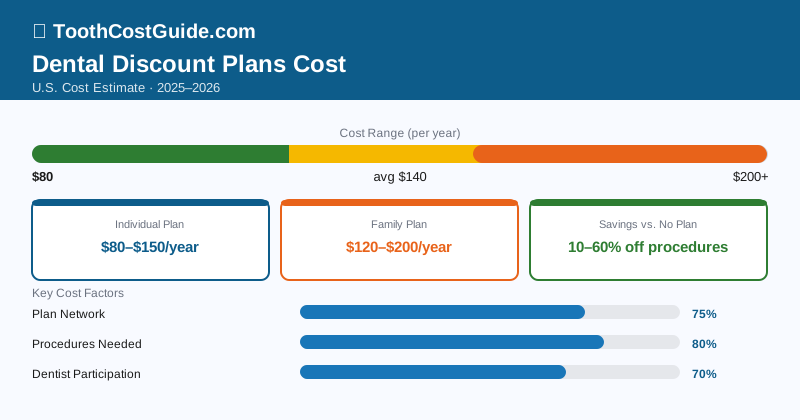
Dental discount plans (also called dental savings plans) cost $80–$200 per year and offer members 10–60% discounts on dental procedures at participating dentists. Unlike dental insurance, discount plans have no annual maximums, no waiting periods, no deductibles, and no claim forms. For the right patient, a dental discount plan provides better value than individual dental insurance — at a fraction of the cost.
| Plan | Annual Cost | Network Size | Average Discount | Best For |
|---|---|---|---|---|
| Careington Care 500 Series | $80–$120/year | 100,000+ dentists | 20–60% | Wide variety of procedures |
| DentalPlans.com network | $80–$200/year | 140,000+ dentists | 20–50% | Nationwide access |
| Aetna Dental Access | $100–$150/year | 230,000+ dentists | 15–50% | Large network |
| Cigna Dental Savings | $100–$180/year | 65,000+ dentists | 20–40% | Existing Cigna customers |
| Spirit Dental | $100–$200/year | 100,000+ dentists | 20–50% | Cosmetic procedures included |
| In-office practice memberships | $99–$400/year | 1 office | Varies | Single loyal practice patient |
How Dental Discount Plans Work
The mechanics are simple:
- You pay an annual membership fee ($80–$200/year for individual, $150–$400/year for family)
- You receive a member card and access to the plan’s online provider directory
- You visit any participating dentist, present your member card, and receive pre-negotiated discounted fees
- You pay the discounted fee directly to the dentist — no claim forms, no reimbursement process, no waiting
Discount plans are not insurance. There are no premiums, deductibles, annual maximums, or insurance company approvals. The plan is simply a negotiated fee schedule between the plan company and participating dentists.
Real-world example: Careington Care 500 at $119/year individual. A routine cleaning normally costs $150 at a participating dentist. With the Careington discount, you pay $75 — a 50% discount. Two cleanings = $150 in cleaning costs. The plan cost $119. Net savings: $31 on cleanings alone. Any fillings, crowns, or other work at 20–50% discount adds to that value significantly.
Dental discount plans have no waiting periods — you can use your discounts from the day you enroll. This makes them the fastest way to access dental care for uninsured patients who need immediate treatment. Most discount plans activate within 24–72 hours of enrollment.
What Dental Discount Plans Save You
Savings vary by procedure and plan, but here are typical discounts at participating dentists:
Preventive care:
- Routine cleaning: 20–50% off ($75–$150 vs. $120–$200 without discount)
- Periodic exam: 20–40% off
- X-rays (bitewings): 20–40% off
- Child cleaning + fluoride: 20–50% off
Restorative:
- Composite filling (1 surface): 20–40% off ($90–$160 vs. $150–$250 without discount)
- Dental crown (porcelain): 20–40% off ($720–$1,100 vs. $1,000–$1,800 without discount)
Major procedures:
- Root canal (molar): 20–30% off ($800–$1,400 vs. $1,000–$1,800 without discount)
- Dental implant: 10–25% off ($2,250–$4,500 vs. $3,000–$6,000 without discount)
- Deep cleaning (per quadrant): 20–40% off ($120–$250 vs. $150–$350 without discount)
Cosmetic:
- Teeth whitening (in-office): 20–50% off
- Dental bonding: 20–30% off
- Veneers: Often included with 10–20% discount — useful since insurance never covers cosmetic work
Dental Discount Plans vs. Dental Insurance
| Factor | Dental Discount Plan | Dental Insurance (Individual) |
|---|---|---|
| Annual cost | $80–$200 | $300–$720 |
| Waiting periods | None | 6–12 months for major work |
| Annual maximum | None | $1,000–$2,000 |
| Deductible | None | $50–$100 |
| Cosmetic coverage | Yes (discounts apply) | No |
| Claim forms | None | Yes |
| How savings are received | Point of service discount | Reimbursement to provider |
| Covers orthodontics | Yes (discounts) | Optional (limited) |
When discount plans beat insurance: For a single healthy adult who needs two cleanings + minor fillings annually, a $99/year discount plan often delivers better savings than $480/year in individual dental insurance premiums.
When insurance beats discount plans: When you have a family, need major work, or your employer substantially subsidizes the premium. Insurance’s 50% coverage on a $1,500 crown ($750 patient share) beats a 30% discount plan savings ($1,050 patient share).
In-Office Membership Plans: A Related Alternative
Many dental practices now offer their own in-house membership plans — typically $99–$400/year — that include:
- Two free routine cleanings
- Annual X-rays
- Periodic exam
- 10–20% off all other treatment at that practice
These are excellent for patients who:
- Prefer a specific practice and visit it consistently
- Are uninsured and primarily need preventive care
- Want to avoid insurance paperwork and network restrictions
Typical in-office plan value:
- Plan cost: $199/year
- Included cleanings (2): $120–$200 value
- Included X-rays (bitewing set): $75–$150 value
- Included exam: $60–$100 value
- Total included value: $255–$450
- Net gain over plan cost: $56–$250
How to Choose a Dental Discount Plan
Check network participation first. The plan is only as useful as the number of participating dentists near you. Visit the plan’s website, enter your zip code, and confirm there are 5–10 options within reasonable driving distance — ideally including a dentist you’d actually want to use.
Compare per-procedure discount schedules. Plans post their discount fee schedules. Compare the specific fees for the procedures you’ll actually use. A plan with a large network but weak discounts on crowns is less valuable than a smaller-network plan with 40% crown discounts.
Read the terms for specialty care. Discount plans vary in how well they cover specialists (periodontists, endodontists, orthodontists). Some plans include specialist discounts; others only cover general dentists.
Use DentalPlans.com to compare multiple discount plans side by side for your specific zip code. The tool shows you exactly how much each plan would cost for your anticipated procedures based on local fee data. This takes the guesswork out of comparing plans.
Financing Options for Remaining Balances
Even with a 20–40% discount, major dental work can still require hundreds to thousands of dollars. Options for managing remaining balances:
CareCredit: Available at participating dental offices. Combine a discount plan’s reduced fee with CareCredit financing for 0% over 6–12 months. The two strategies are compatible and stacking them maximizes your savings.
In-office payment plans: At practices with in-house membership plans, the practice typically offers installment payment options since they have a direct relationship with you as a member.
Bottom Line
Dental discount plans cost $80–$200/year and deliver 10–60% savings on dental procedures with no waiting periods, no annual limits, and no claims paperwork. For uninsured adults with routine dental needs, a $99/year discount plan typically provides better financial value than a $480/year individual dental insurance policy with restrictive waiting periods and low annual maximums.
The ideal approach for many uninsured patients: an in-house practice membership plan ($150–$300/year) that covers cleanings and provides discounts at a trusted local dentist — zero insurance complexity, predictable costs, and genuine savings.
Always get a written treatment plan before agreeing to any dental work. When using a dental discount plan, ask the dental office to confirm the discounted fee schedule prices for your planned procedures before your appointment — not all staff members are equally familiar with discount plan schedules, and confirming in advance prevents billing confusion.