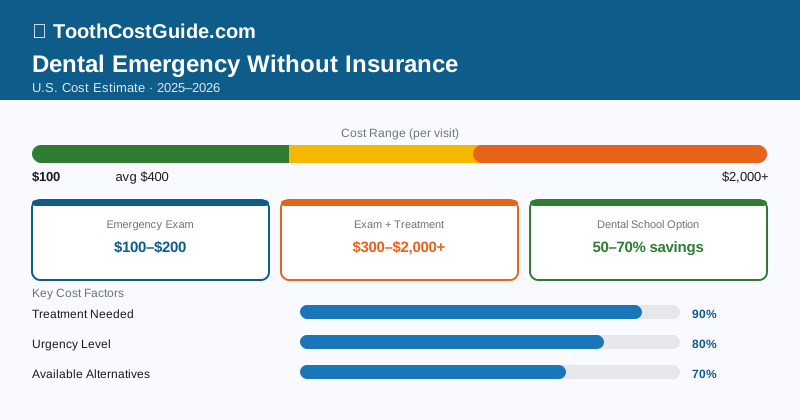
Dental emergencies without insurance can cost $200–$3,000+ out of pocket for a single incident. Nearly 74 million Americans have no dental insurance, yet dental emergencies don’t wait. The good news: there are legitimate, effective ways to get emergency dental care for far less than the standard fee — or even free. This guide covers every option for uninsured patients facing a dental crisis.
| Treatment | Full Price (No Insurance) | Dental School | Community Clinic | Discount Plan Price |
|---|---|---|---|---|
| Emergency exam + X-ray | $100–$250 | $40–$80 | $0–$50 | $60–$150 |
| Tooth extraction (simple) | $150–$300 | $75–$150 | $0–$75 | $100–$200 |
| Tooth extraction (surgical) | $300–$600 | $150–$300 | $0–$150 | $200–$400 |
| Root canal (molar) | $1,000–$1,500 | $400–$600 | $200–$600 | $600–$900 |
| Crown | $1,000–$1,800 | $400–$700 | $300–$700 | $600–$1,100 |
| Antibiotics (Rx, with GoodRx) | $40–$80 | — | $0–$20 | $4–$20 |
What Affects the Cost Without Insurance
The treatment required. An emergency exam with antibiotics might cost $150–$250 total. An emergency root canal and crown runs $1,700–$3,300. The procedure needed — determined by what’s wrong — sets the floor on what you’ll spend.
Where you go. Full-price private dental practice vs. dental school clinic vs. community health center vs. dental chain — costs vary enormously for the same procedure. A molar root canal at a private practice: $1,200. The same procedure at a dental school: $450. The same at a Federally Qualified Health Center: $200–$500 on sliding scale.
Discount plan membership. Dental discount plans cost $80–$150/year and provide 10–50% off at participating dentists. They’re not insurance — there are no claims, no annual limits, and no waiting periods. For someone without insurance needing $2,000 in emergency work, a $100 plan that saves 30% pays for itself in the first visit.
Time sensitivity. Waiting longer usually costs more — decay spreads, infections worsen, and a $300 filling becomes a $1,500 root canal. Emergency treatment initiated the same day often prevents cost escalation.
Treatment Options & Costs for the Uninsured
Option 1: Dental school clinics ($40–$600 per procedure)
Accredited dental schools operate supervised clinics where advanced students provide care at 40–70% below private practice rates. Treatment is supervised by licensed faculty dentists. The trade-off is longer appointments (1.5–3 hours for procedures a private dentist does in 45 minutes) and potential waiting lists.
Find clinics: Search the ADEA (American Dental Education Association) database at adea.org, or Google “[your city] dental school clinic.”
Option 2: Federally Qualified Health Centers ($0–sliding scale)
FQHCs receive federal funding to provide healthcare including dental services to underserved populations. Fees are charged on a sliding scale based on income and family size. Patients at or below 100% of the federal poverty level pay little to nothing.
Find centers: Call 1-800-275-4772 or use the HRSA clinic finder at findahealthcenter.hrsa.gov.
Option 3: Dental discount plans ($80–$150/year membership)
Plans like Careington Care 500, Aetna Dental Access, and Cigna Dental Savings Plan provide immediate membership (no waiting period) and discounted fees at participating dentists — typically 15–50% below the standard rate. These are not insurance; they’re negotiated fee agreements. Useful for ongoing and emergency care.
Option 4: Dental chains and corporate dentistry
Aspen Dental, Western Dental, Comfort Dental, and DentalWorks often have same-day emergency slots, extended hours, and published self-pay pricing. Some offer promotional first-visit packages or financing. Not always the lowest price, but accessible and convenient.
Option 5: Negotiate directly with the dentist
Many private dentists offer a “cash discount” of 5–15% for uninsured patients paying at the time of service. Ask the front desk: “Do you offer any discounts for patients paying cash without insurance?” Some offices have in-house membership plans ($200–$400/year) that include basic exams and X-rays plus discounts on treatment.
Option 6: Dental assistance programs
- Dental Lifeline Network (dentallifeline.org): Free comprehensive dental care for elderly, disabled, and medically fragile patients. Eligibility criteria apply.
- State Medicaid dental benefits: Medicaid covers emergency dental in all 50 states (at minimum), with many states covering more. Check your state’s Medicaid dental benefit at medicaid.gov.
- Children’s dental assistance: CHIP (Children’s Health Insurance Program) covers dental for children in families that don’t qualify for Medicaid. Apply at healthcare.gov.
With vs. Without Insurance — The Real Difference
With dental insurance: A $1,500 emergency root canal + crown might cost $600–$900 out of pocket after the plan pays its 40–60% share.
Without insurance at full price: The same $1,500 treatment runs $1,500 or more.
Without insurance, using alternatives:
- Dental school: $650–$1,100 total
- Discount plan + private dentist: $900–$1,200 total
- FQHC on sliding scale: $200–$700 total
- Uninsured discount negotiated at private practice: $1,200–$1,400 total
What To Do in a Dental Emergency Without Insurance
- Don’t avoid care because of cost. Untreated dental emergencies worsen dramatically — a $300 extraction becomes a $5,000 hospital stay if left until infection spreads.
- Call your area’s FQHC first — these centers are specifically designed for this situation and offer the best pricing.
- Search dental school emergency slots — many schools reserve urgent appointments for acute pain cases.
- Join a dental discount plan before you need extensive treatment — plans activate within 24–72 hours with no waiting period.
- Ask every office you call about self-pay rates — quote their prices, mention you’re paying cash, ask if they can do better.
- Use GoodRx for prescriptions — antibiotics for dental infections cost $4–$15 with GoodRx at any major pharmacy.
How to Save Money
Prioritize the infection, not the cosmetics. In an emergency without insurance, focus your limited resources on eliminating pain and infection first. Cosmetic concerns (the visible look of the tooth) can wait.
Use extraction over root canal if cost is prohibitive. Root canal + crown can cost $1,700–$3,300; extraction costs $150–$600. Extraction removes the problem immediately. The gap can be addressed later with a lower-cost partial denture or, eventually, an implant when finances allow.
Apply for Medicaid. If you’re uninsured due to job loss or life change, you may qualify for Medicaid, which covers emergency dental in all states. Apply at healthcare.gov or your state Medicaid office — coverage can be retroactive to the application month.
Set up a payment plan. Dental offices routinely set up 3–6 month payment plans for uninsured patients. CareCredit and Sunbit dental financing offer 0% interest promotional periods of 6–18 months.
A dental emergency with facial swelling, fever, or difficulty breathing requires emergency room care regardless of your insurance status. Hospitals must provide emergency stabilization under EMTALA regardless of ability to pay, and hospital financial assistance programs can significantly reduce the bill afterward.
Bottom Line
A dental emergency without insurance is expensive at full price — but rarely has to be paid at full price. Dental schools, FQHCs, Medicaid, and dental discount plans collectively offer paths to care at 30–80% less than standard rates. Prioritize finding an FQHC or dental school for the highest savings. Never avoid treatment because of cost: the emergency will cost far more if an infection is left untreated.