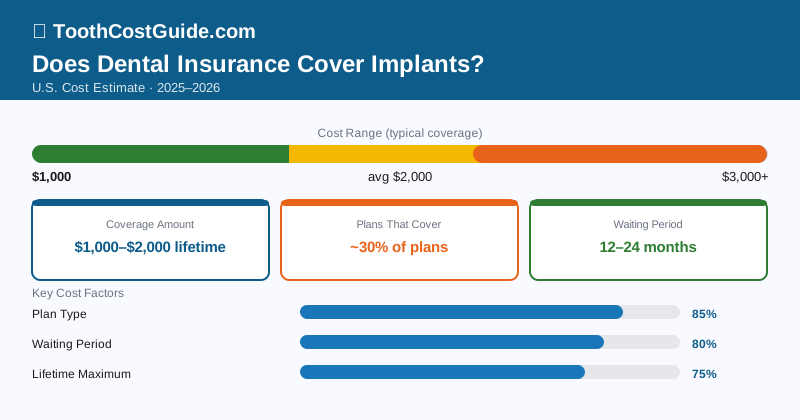
A single dental implant costs $3,000–$5,000 out of pocket, but about 30–40% of dental plans now include some implant coverage — typically 50% coverage after a 12-month waiting period, potentially saving you $1,500–$2,500 per tooth. However, not all “implant coverage” is created equal: some plans cover only the crown (restoration) and not the implant post and abutment, capping your savings at a few hundred dollars. Knowing exactly what a plan covers before signing up is essential if implants are part of your dental future.
| Implant Component | Typical Cost | Insurance Coverage (if covered) | Your Share |
|---|---|---|---|
| Implant post (titanium screw) | $1,500–$2,000 | 50% on comprehensive plans | $750–$1,000 |
| Abutment (connector piece) | $500–$800 | 50% on comprehensive plans | $250–$400 |
| Crown (tooth restoration) | $1,000–$1,800 | 50% on most plans | $500–$900 |
| Full implant (all three parts) | $3,000–$5,000 | 50% if fully covered | $1,500–$2,500 |
| Bone graft (if needed) | $300–$3,000 | Sometimes covered | Varies |
| Extraction (of failing tooth) | $150–$350 | Usually covered | $75–$175 |
How Dental Implant Coverage Works
Dental implants were once nearly universally excluded from dental insurance — considered “cosmetic” or “elective” even when replacing a tooth lost to decay or injury. That’s changed significantly over the past decade. As implants have become the standard of care for tooth replacement (often preferred over bridges), more insurance plans have added implant coverage.
What “implant coverage” means on most plans:
- Implants are classified as a major service (the most expensive tier)
- Coverage is typically at 50% of the plan’s allowable amount
- The plan’s allowable amount may be lower than your dentist’s actual fee — meaning you pay 50% of the allowable plus any amount above the allowable
- Waiting periods of 12 months almost universally apply
- Annual maximums ($1,000–$2,000) significantly limit the plan’s contribution in any single year
The missing tooth clause problem: Many dental plans that technically cover implants still have a “missing tooth clause” — meaning they won’t cover replacement of a tooth that was already missing when you enrolled. If you sign up for implant-covering insurance because you have a gap in your smile from a tooth you lost two years ago, you may find coverage denied due to this clause. Always ask specifically whether the plan covers replacement of teeth missing at enrollment.
Annual maximum limitation: Even a plan that covers implants at 50% may only pay $1,000–$2,000 per year. A single implant can cost $3,000–$5,000. The 50% coverage on a $4,000 implant would theoretically be $2,000 — but if your annual maximum is $1,500, the plan only pays $1,500, not $2,000. Some people spread implant procedures over two policy years to maximize benefits.
When a plan says it “covers implants,” read the fine print. Does it cover the implant post, abutment, and crown — or just the crown? Does a missing tooth clause apply? What is the annual maximum? A plan covering only the crown at 50% might save you $500; a plan covering all three components at 50% without a missing tooth clause saves $1,500–$2,500 per tooth.
Costs & Coverage Details
Plans that cover implants comprehensively (post + abutment + crown):
- Spirit Dental Platinum/Gold plans: $45–$65/month; covers implants at 50%; NO missing tooth clause on most plans; annual max $3,000–$5,000; no waiting period
- Ameritas PrimeStar plans: $40–$60/month; covers implants after 12-month wait; varies by state
- Some Delta Dental PPO Plus Premier plans: Covers implants at 50% in many markets after 12-month wait; check local plan for missing tooth clause
- Cigna Dental 1500 Plus: ~$45–$60/month; covers implants at 50% in many markets
- Guardian Direct Diamond/Platinum: ~$50–$70/month; comprehensive implant coverage in many states
Plans that cover only the crown restoration:
- Many entry-level PPO plans cover the “implant crown” as a major restorative prosthetic but treat the implant post and abutment as separate “surgical” or excluded services
- Savings: $500–$900 on the crown only, versus nothing on the $2,000–$2,800 post and abutment
Plans with NO implant coverage:
- Most HMO/DHMO plans exclude implants
- Many ACA marketplace standalone dental plans exclude implants
- Entry-level individual PPO plans (under $30/month) often exclude implants entirely
- Plans with “least expensive alternative treatment” provisions may offer bridge coverage instead
Real-world cost scenario:
- Implant cost: $4,200 (post $1,700 + abutment $600 + crown $1,900)
- Plan with full implant coverage at 50%, $2,000 annual max: Plan pays $2,000, you pay $2,200
- Plan with crown-only coverage at 50%: Plan pays $950 (50% of crown), you pay $3,250
- Plan with no implant coverage: You pay $4,200
- Spirit Dental Platinum ($55/month, $5,000 annual max): Plan pays $2,100, you pay $2,100 plus $660 in premiums
Pros and Cons
Dental insurance with implant coverage — Pros:
- Saves $1,500–$2,500 per implant on comprehensive plans
- Implants last 20+ years — the investment is worthwhile
- Annual premiums ($480–$780/year) recovered with savings on first implant
- Peace of mind for future tooth loss
Dental insurance with implant coverage — Cons:
- Higher monthly premiums
- Annual maximums often cap total savings
- Waiting periods of 12 months on most plans
- Missing tooth clause may eliminate coverage retroactively
- Multi-implant cases still expose significant out-of-pocket cost
Who Implant Coverage Is Best For
People who have been told they’ll need one or more implants in the future — whether due to root fractures, severe decay, or failed root canals — should enroll in an implant-covering plan immediately. The 12-month waiting period clock starts ticking. A year is often enough time to plan and budget for the procedure.
Patients in their 40s–60s facing increasing probability of future tooth loss benefit from long-term implant coverage even before they know they’ll need it. Preventive coverage is worth its premium given the near-certain eventual need.
People with a single missing tooth wanting an implant should specifically check the missing tooth clause before purchasing. If the tooth has been missing for years, only plans without the missing tooth clause will be relevant.
Full-mouth restoration candidates facing $20,000–$50,000 in implant work will benefit most from high-annual-maximum plans, potentially spreading treatment across multiple years to maximize benefits.
How to Save Money on Implants
Spread implant placement across two policy years. The implant post is placed at one appointment, and the crown is placed 3–6 months later. If you have a $2,000 annual maximum, have the post and abutment placed in December (charged to year one) and the crown placed in January (charged to year two). This doubles your effective benefit to $4,000 total.
Choose plans with high annual maximums. Spirit Dental offers annual maximums of $3,000–$5,000 — significantly higher than typical $1,000–$2,000 limits. For implant coverage specifically, the annual maximum is often more important than the premium.
Enroll in implant coverage well before you need it. Since most plans have 12-month waiting periods for major work, enroll today even if you won’t have the procedure for a year. This eliminates waiting period exposure.
Get pre-treatment estimates (predeterminations). Submit your treatment plan to the insurance company before starting. They’ll tell you exactly what they’ll cover, including whether any exclusions apply. Surprises after the fact are costly — clarify coverage in writing first.
Ask oral surgeons about in-network pricing. Out-of-network oral surgeons can charge significantly more than the plan’s allowable amount. Using an in-network oral surgeon ensures the plan’s negotiated rate applies, minimizing the gap between what the plan pays at 50% and your actual cost.
Consider dental schools for implants. For a $4,000 implant, a dental school may charge $1,500–$2,500 for the same procedure supervised by a licensed faculty member. Combining dental school pricing with an insurance plan’s reimbursement can dramatically reduce net cost.
“Implant-covered” dental plans sometimes advertise broadly but contain a clause stating that implants are only covered when the implant is the “least expensive appropriate treatment.” Since a bridge is generally cheaper than an implant, some plans will only pay the bridge benefit amount even when approving an implant — which may be less than 50% of the implant cost. Confirm with the insurer exactly how much they’ll pay for your specific situation before starting treatment.
About 30–40% of dental plans now cover implants, but coverage quality varies enormously. Spirit Dental, Ameritas, and certain Delta Dental plans offer the most comprehensive implant coverage with no missing tooth clause and high annual maximums. Always verify that the plan covers the implant post, abutment, and crown — not just the crown — and confirm the missing tooth clause doesn’t apply to your situation.
Bottom Line
Dental insurance can meaningfully reduce implant costs — a comprehensive plan saving 50% on a $4,000 implant saves $2,000, far more than a year or two of premiums. But only about a third of dental plans cover implants, and missing tooth clauses, low annual maximums, and “crown only” coverage limit real-world savings. If implants are in your future, look specifically for plans like Spirit Dental or Ameritas that cover all three implant components, have no missing tooth clause, and offer annual maximums of $2,000 or higher. Enroll at least 12 months before you need the procedure.