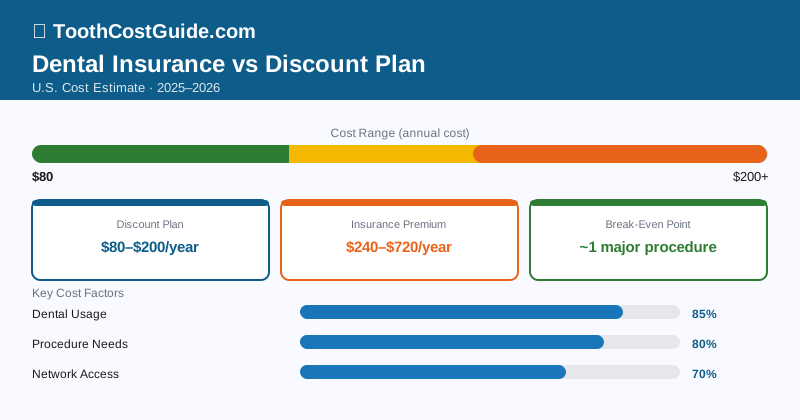
Dental insurance pays a percentage of your covered dental costs up to an annual maximum, while dental discount plans (also called dental savings plans) simply give you access to reduced fees at participating dentists — with no annual limits, no claims, and no waiting periods. For low-use patients, a discount plan at $8–$20/month often beats dental insurance at $30–$60/month. For patients needing major work, insurance usually wins — but not always. Here’s the complete comparison.
| Feature | Dental Insurance | Dental Discount Plan |
|---|---|---|
| Monthly cost | $20–$60 | $8–$20 |
| Annual deductible | $50–$200 | None |
| Annual maximum | $1,000–$2,000 | None (unlimited savings) |
| Waiting periods | 6–12 months for major work | None |
| Claims process | Yes (file/submit claims) | None (just show card) |
| Preventive care | Usually 100% covered | 20–40% discount |
| Filling coverage | 70–80% after deductible | 20–40% off the fee |
| Crown coverage | 50% after deductible | 20–50% off the fee |
| Network size | 50,000–155,000 dentists | 100,000–200,000+ dentists |
| Pre-existing conditions | Waiting periods may apply | No restrictions |
How Each Option Works
Dental insurance is a risk-pooling product. You pay a monthly premium; the insurer pays a percentage of covered dental services after you meet your deductible, up to an annual maximum. Insurance is most valuable when you have expensive, unpredictable dental needs. The annual maximum ($1,000–$2,000) caps how much the insurer will pay in any given year.
Dental discount plans are not insurance at all. They’re membership programs that grant you access to a network of dentists who have agreed to charge reduced fees to plan members. You pay the dentist directly at the discounted rate. There are no claims, no deductibles, no annual maximums, and no waiting periods. The discount is immediate and applies to virtually all dental services including implants, cosmetic procedures, and orthodontics — categories that insurance often excludes or severely limits.
Major discount plan providers:
- Careington Dental (used by many dental savings networks): 20–60% discounts, $8–$15/month individual
- DentalPlans.com: Marketplace of 25+ discount networks; individual plans $10–$20/month
- Cigna Dental Savings: $20–$30/month; powered by Cigna’s network
- Aetna Dental Access: $10–$15/month individual; strong network
- AARP Dental Savings Program: $10–$14/month; large network for AARP members
Dental insurance wins when you need expensive restorative work — a plan paying 50% of a $1,500 crown saves $750 (minus the $400–$600 in annual premiums). A discount plan wins when you primarily need cleanings and basic care, since the $120–$240/year membership cost is far less than insurance premiums, and the discounts cover all services immediately with no caps.
Costs & Coverage Details
Cost comparison for a light dental year (cleanings only):
- Dental insurance ($40/month = $480/year + $0 out-of-pocket for cleanings) = $480 total spent
- Dental discount plan ($15/month = $180/year; cleanings at $70 vs. $130 normal price = $60 savings x 2 = $120 saved) = $180 spent - $120 savings = $60 effective cost
- Winner: Discount plan by a wide margin for preventive-only users
Cost comparison for a moderate dental year (2 cleanings + 1 filling):
- Insurance: $480 premiums + $0 cleanings + $40 (20% of $200 filling after $100 deductible) = $620 total
- Discount plan: $180 membership + $70 x 2 cleanings + $130 filling (35% off $200) = $450 total
- Winner: Discount plan still ahead, assuming no major work
Cost comparison for a heavy dental year (2 cleanings + 1 crown):
- Insurance ($40/month PPO): $480 premiums + $0 cleanings + $800 out-of-pocket for crown ($100 deductible + 50% of $1,400) = $1,280 total. Without insurance: $1,400 + $130 cleanings = $1,530. Savings: $250.
- Discount plan ($15/month): $180 membership + $70 x 2 cleanings + $840 crown (40% off $1,400) = $1,160 total
- Winner: Discount plan by about $120, depending on exact discount percentage and crown cost
Cost comparison for catastrophic dental year (crown + bridge + root canal):
- Insurance ($40/month PPO): $480 premiums; plan pays up to $1,500 maximum; you pay $100 deductible + ~$2,500 remaining above the max = $3,080 total
- No insurance, no discount: Pay full price ~$6,000–$8,000
- Discount plan: $180 membership; save 30–50% on all three procedures; total ~$3,500–$4,500
- Winner: Insurance (with its $1,500 max benefit) is slightly ahead, though discount plan has no cap
Pros and Cons
Dental insurance — Pros:
- For major work, insurer bears significant financial risk
- Predictable maximum out-of-pocket in most scenarios
- Negotiated rates with in-network dentists even without discount plans
- ACA marketplace plans include pediatric dental as essential health benefit
- Recognized by employers and tax-advantaged accounts (FSA/HSA-compatible)
Dental insurance — Cons:
- Higher monthly premiums ($20–$60/month)
- Annual maximums cap savings in bad dental years
- Waiting periods delay coverage for needed major work
- Pre-existing condition exclusions (missing tooth clauses, etc.)
- Claims process and paperwork
Dental discount plan — Pros:
- Very low monthly cost ($8–$20/month)
- No waiting periods — immediate savings on any procedure
- No annual caps — unlimited discounts throughout the year
- No claims process — pay the discounted fee and done
- Covers procedures insurance often excludes (implants, cosmetic, orthodontics on some networks)
- Works in combination with insurance (can use discounts for amounts above annual max)
Dental discount plan — Cons:
- Not insurance — doesn’t pay claims, only reduces fees
- Discount amount varies by procedure and dentist — not guaranteed savings percentage
- Network participation can be spotty in rural areas
- Dentist may not honor discount for some procedures
- No tax advantages (not FSA/HSA eligible)
When Each Makes More Sense
Dental insurance makes more sense when:
- You know you’ll need a crown, bridge, or other major procedure in the next 2 years
- You have children who need sealants, orthodontic evaluations, and pediatric care
- Your employer subsidizes dental premiums (the employer contribution tips the math significantly)
- You prefer predictability and knowing the insurer has financial skin in the game
- You qualify for Medicaid, CHIP, or subsidized marketplace dental
Dental discount plans make more sense when:
- You mainly need cleanings and the occasional filling
- You currently have no dental coverage and need immediate access to reduced-fee care
- You’ve exhausted your annual insurance maximum and still need work done
- You want implants, cosmetic work, or orthodontics that insurance doesn’t cover
- You’re a senior whose Medicare Advantage dental has a low annual maximum
- Your income makes even $30/month insurance feel expensive
Combination strategy: Many savvy dental consumers use BOTH — a basic dental insurance plan for covered services plus a dental discount plan as a “top-up” for services above the annual maximum or excluded from insurance. Paying $8–$15/month for a discount plan to cover the second half of the year after hitting your insurance maximum is excellent value.
How to Save Money
Stack a discount plan on top of insurance. If your insurance pays 50% of a crown and you hit your annual maximum, the discount plan can reduce the remaining out-of-pocket balance. Many dentists will honor both an insurance contract and a discount plan membership for the same visit.
Use DentalPlans.com to compare networks. Enter your zip code and dentist’s name to see which discount plans include your dentist and what the specific discounted fees would be for procedures you need. This data lets you calculate exactly how much you’d save.
Verify your dentist accepts the discount plan. Unlike insurance networks that are regulated, discount plan participation is voluntary and can vary. Always call your dentist to confirm they honor your specific plan and what their discounted fee is for your procedure before relying on the savings.
Use discount plans for procedures insurance won’t cover. Insurance usually excludes implants, cosmetic bonding, veneers, and Invisalign (or severely limits them). Discount plans often provide 20–50% off these procedures — the only price reduction available.
Dental discount plans are not regulated like insurance in all states. Some “discount dental plans” are effectively scams that charge membership fees but provide little actual savings or have poor provider networks. Use plans from established companies like Careington, Aetna Dental Access, or DentalPlans.com’s curated marketplace, and verify provider participation before enrolling.
For most Americans who mainly need cleanings and occasional fillings, a dental discount plan ($8–$20/month) is more cost-effective than dental insurance ($30–$60/month). For anyone needing crowns, bridges, or other major restorative work, dental insurance — especially with a high annual maximum — saves more. The best strategy for high dental needs: combine both.
Bottom Line
Dental insurance and dental discount plans serve different needs. Insurance is best for people expecting major dental work — a plan paying 50% on a $1,500 crown saves $650+ after premiums. Discount plans are best for people who mainly need cleanings and basic care — $8–$20/month with no waiting periods, no caps, and no paperwork beats $40/month insurance for low-use patients. For heavy dental users, use both: insurance for covered procedures and a discount plan for costs above your annual maximum or excluded services. The combination often provides the lowest net cost of any single option.