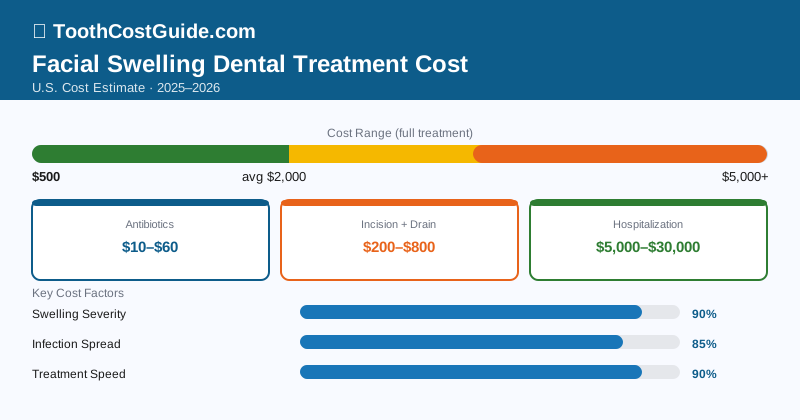
Facial swelling from a dental cause requires prompt evaluation — the severity of the swelling determines whether you need a dentist ($500–$2,000) or an emergency room ($3,000–$30,000+). Most dental-origin facial swelling is from a tooth abscess and is treated definitively with root canal or extraction plus antibiotics. Swelling that has spread beyond the tooth’s immediate vicinity warrants the same-day evaluation regardless of cost.
| Cause of Facial Swelling | Treatment | Cost (No Insurance) |
|---|---|---|
| Periapical abscess (localized) | Root canal or extraction + antibiotics | $700–$2,500 |
| Pericoronitis (wisdom tooth) | Antibiotics + extraction | $300–$900 |
| Gum abscess | Drainage + deep cleaning | $500–$1,500 |
| Salivary gland infection | Antibiotics + heat/massage | $150–$800 |
| Spreading cellulitis (soft tissue) | Hospital + IV antibiotics | $5,000–$20,000 |
| Deep space infection | Surgery + ICU + IV antibiotics | $15,000–$50,000+ |
| Allergic reaction (dental material) | Antihistamines + monitoring | $100–$500 |
| Post-operative swelling (expected) | Ice, ibuprofen, monitoring | $0–$100 |
What Affects the Cost
Cause of swelling. Facial swelling from dental causes includes: dental abscess (most common), pericoronitis (wisdom tooth gum infection), salivary gland infection (blocked duct or bacterial sialadenitis), cellulitis (spreading soft tissue infection), or — rarely — a tumor. Correctly identifying the cause changes the treatment and cost dramatically.
Severity and spread. A localized swelling confined to the cheek near one tooth is the most manageable. Swelling extending below the chin, into the neck, or around the eye indicates spread to fascial spaces and requires hospital-level care.
Time since onset and progression. Swelling that developed over 48+ hours without spreading may be at a plateau — still dangerous but somewhat more stable. Swelling that doubled in size in 12 hours is actively spreading and requires immediate escalation.
Patient immune status. Diabetic patients, immunosuppressed individuals (on chemotherapy, steroids, or biologics), organ transplant recipients, and patients with HIV/AIDS are at dramatically higher risk for rapid spread of dental infections. These patients warrant more aggressive immediate treatment.
Whether surgery is required. Localized abscesses are drained in the dental office ($150–$400). Deep fascial space infections require surgical drainage under general anesthesia in the operating room ($8,000–$20,000+ for the surgical and hospital components).
Treatment Options & Costs
Dental-office management ($700–$2,500): For facial swelling confined to the cheek adjacent to the offending tooth, the dentist removes the infection source (root canal or extraction), drains any visible abscess, prescribes antibiotics, and monitors closely. Swelling typically begins to improve within 24–48 hours.
Incision and drainage ($150–$400): When a fluctuant (pus-filled) collection is identifiable in the gum or cheek soft tissue, the dentist or oral surgeon drains it under local anesthesia. Immediate relief; speeds resolution when combined with antibiotics and definitive dental treatment.
ER evaluation for spreading swelling ($800–$3,000+ ER cost): When swelling is significant or spreading, an ER visit provides CT imaging to map the extent of infection, IV antibiotics for severe or systemic infection, and surgical consultation. The ER itself doesn’t treat the dental source — a dentist or oral surgeon does follow-up treatment.
Hospitalization for cellulitis ($5,000–$20,000): Soft tissue infections without a definable abscess to drain require IV antibiotics and close monitoring for airway changes. IV penicillin G or ampicillin-sulbactam is typically used. Hospital stay: 2–5 days.
Surgical drainage for deep space infection ($15,000–$50,000): Pus in the submandibular, parapharyngeal, or masticator spaces requires neck incisions under general anesthesia. The surgeon evacuates pus, places closed-suction drains, and irrigates the spaces. Multiple drain changes over days. ICU monitoring often required.
With vs. Without Insurance
Dental insurance covers the dental components (root canal, extraction, drainage in office):
- Root canal: 40–60% coverage, ~$400–$900 out of pocket
- Extraction: 75–90% coverage, ~$20–$150 out of pocket
- Drainage: 50–80%, ~$30–$100 out of pocket
Medical insurance covers the hospital and surgical components:
- ER visit: ER copay ($150–$500) + deductible application
- Hospitalization: Annual deductible + 20% coinsurance up to out-of-pocket maximum (typically $8,700 individual for ACA plans in 2024)
- Surgery: Covered under in-patient major medical
Out-of-pocket maximum: Most Americans with ACA-compliant insurance will not pay more than $8,700 (individual) or $17,400 (family) in a calendar year even for extremely expensive hospital care.
Uninsured: Hospital charity care is available at most non-profit hospitals for patients below 200–400% of the federal poverty level. For severe infections requiring hospitalization, apply immediately — bills can be reduced to $0 for qualifying patients.
What To Do — Based on Swelling Level
Mild swelling (soft, localized to cheek near one tooth, no fever):
- Call dentist immediately for same-day appointment
- Take ibuprofen 400–600 mg every 6 hours
- Apply a cold pack (not heat) to the outside of the cheek
- No food or drink in case IV sedation or surgery is needed
Moderate swelling (firm, extending below the cheekbone, low fever 100–101°F):
- Go to a dentist today — call ahead to describe symptoms
- If dentist can’t see you, go to urgent care for antibiotics and same-day dental referral
- Do NOT apply heat to the swelling
Severe swelling (extending toward neck or chin, fever above 102°F, difficulty opening mouth):
- Go to an emergency room today — bring someone to drive you
- Take ibuprofen while en route for fever control
- Don’t eat or drink (you may need emergency surgery)
Rapidly spreading swelling, difficulty breathing or swallowing:
- Call 911 immediately
- Lay flat or in the position most comfortable for breathing
- Tell EMS you have a suspected dental infection
How to Save Money
Treat the tooth before swelling develops. The single best cost-reduction strategy. A $1,200 root canal beats a $25,000 hospitalization by every financial metric.
Use FQHCs and dental schools early. If cost has been preventing you from treating a painful tooth, FQHCs and dental schools offer the same treatment for 40–80% less. Don’t wait until swelling is present.
GoodRx for antibiotics. Amoxicillin costs $4–$12 with GoodRx — use it immediately when the prescription is written.
Apply for Medicaid before the ER bills arrive. If you’re uninsured and end up hospitalized, apply for Medicaid as soon as possible. Most states allow retroactive Medicaid coverage to the month of application, which can cover existing bills.
Facial swelling that involves the neck, causes difficulty swallowing, alters your voice, or makes you feel like your airway is narrowing is a life-threatening emergency. Call 911 immediately. Do not drive yourself. Do not wait for a dental appointment. This type of swelling can progress to complete airway obstruction within hours.
Bottom Line
Dental-related facial swelling costs $700–$2,500 to treat at the dental level — and this is where it should be treated. Delay allowing the infection to spread to deep fascial spaces increases cost to $15,000–$50,000 and introduces life-threatening risk. Assess your swelling honestly using the guidelines above. When in doubt, go to the ER — the cost of evaluation is trivial compared to the risk of an unrecognized spreading infection.