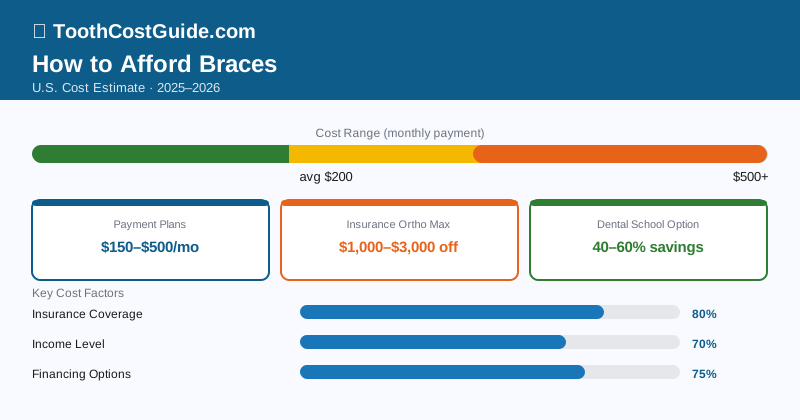
Braces cost $3,000–$8,000 for a full treatment course — but patients who use insurance, HSA/FSA accounts, dental school orthodontic programs, and payment plans can cut that cost to $1,200–$4,000. With orthodontic benefits, a child’s braces may cost parents only $500–$2,000 out of pocket.
| Braces Type | Full Price (No Insurance) | With Insurance | Dental School | Monthly Payment |
|---|---|---|---|---|
| Traditional metal braces | $3,000–$7,000 | $1,500–$4,500 | $1,500–$3,000 | $75–$200/mo |
| Ceramic braces | $4,000–$8,000 | $2,000–$5,000 | $2,000–$3,500 | $100–$225/mo |
| Clear aligners (Invisalign) | $3,500–$8,000 | $2,000–$5,500 | $2,500–$4,000 | $100–$250/mo |
| Lingual braces (behind teeth) | $8,000–$13,000 | $5,500–$10,000 | Rarely offered | $200–$400/mo |
| Retainers (after treatment) | $400–$1,000 | Sometimes covered | $150–$400 | — |
How It Works
Orthodontic treatment through braces or clear aligners moves teeth gradually over 12–36 months using constant, gentle pressure. Payments are almost always structured as installment plans across the treatment period — orthodontists have offered built-in payment plans for decades.
Most orthodontists charge a flat fee for the full course of treatment, not per appointment. This makes budgeting straightforward: the total cost is set at the start, and you pay it off over the treatment period.
Payment structure: A typical arrangement is a down payment of $500–$1,000 and then monthly payments of $100–$300 over the remaining treatment period. Many orthodontists charge 0% interest for their in-house plans.
Costs & Savings Details
Dental insurance orthodontic coverage: About 50–60% of employer dental plans include orthodontic benefits. These typically pay 50% of orthodontic fees up to a lifetime maximum of $1,000–$2,000 per person. For a child’s $5,000 braces, this means the insurance pays $1,500 (50% up to the $1,500 maximum) and you pay $3,500.
HSA/FSA savings: Orthodontic treatment is fully eligible for HSA and FSA funds. A $5,000 braces bill paid through an HSA at a 27% effective tax rate saves $1,350. For FSA, you can split payments across two plan years to maximize your annual $3,300 limit — pay the down payment in December from the current year’s FSA, then monthly payments from next year’s FSA.
Dental school orthodontic programs: University dental schools with orthodontic residency programs offer comprehensive treatment by supervised residents for 40–60% of private practice prices. Waiting lists can be long (6–12 months) and appointments require more time, but the savings are real. A full treatment course for metal braces at a dental school: $1,500–$3,000.
Budget clear aligner alternatives: Companies like Byte, Candid, and NewSmiles offer direct-to-consumer clear aligner treatment for mild-to-moderate cases at $1,700–$3,000 — significantly cheaper than in-office Invisalign. These are not suitable for complex orthodontic cases but work for minor spacing and crowding.
Eligibility / Who Qualifies
Insurance orthodontic benefits: Most plans restrict orthodontic benefits to dependent children under age 18–19. Adult orthodontic coverage is included in fewer plans and often at lower benefit levels. Review your plan’s “Orthodontia” section carefully.
FSA for orthodontic payments: You can pay orthodontic fees from your FSA. Importantly, if the total treatment fee is contracted at the start, you can use FSA funds to pay a lump sum upfront — even if treatment spans multiple years. Ask your FSA administrator about the “orthodontic services contracted in advance” rule.
Dental school programs: Anyone who qualifies clinically. Dental school ortho programs can handle most standard cases; severe skeletal discrepancies requiring jaw surgery may be referred to affiliated oral surgeons.
Budget aligner companies: Mild-to-moderate crowding or spacing only. Require at least 20 teeth. Not for patients with missing teeth, significant overbite/underbite, or prior orthodontic treatment complications.
Pros and Cons
Pros of dental school orthodontics:
- 40–60% cost savings
- Supervised by experienced faculty orthodontists
- Same quality materials as private practices
- Payment plans usually available
Pros of in-house orthodontist payment plans:
- 0% interest in most cases
- No credit check
- Payments match treatment timeline (you pay as you go)
- Flexible for families managing cash flow
Cons:
- Insurance lifetime maximums ($1,500–$2,000) cover less than half the cost for most adults
- Dental school requires more time per appointment and longer waits
- Budget aligner companies are not suitable for complex cases and lack supervision
Never choose orthodontic treatment based on price alone. A $3,900 “Invisalign deal” from a general dentist with limited aligner experience may require longer treatment, more revisions, and inferior results compared to a board-certified orthodontist. For complex cases — significant crowding, bite issues, jaw problems — a specialist is worth the cost.
Step-by-Step Guide
Get an orthodontic consultation: Initial consultations are free at most orthodontic offices. Get at least 2–3 consultations to compare treatment plans, duration estimates, and fees.
Review your dental insurance orthodontic benefits: Log into your insurer’s portal or call the member services number. Ask: “What is my orthodontic benefit, lifetime maximum, and is there an age restriction?” Find out if any waiting period applies.
Apply insurance to treatment cost: Give the orthodontist your insurance information before signing a treatment contract. The office will verify benefits and adjust your balance accordingly.
Open or contribute to an HSA/FSA: If not already enrolled, check whether you’re eligible for an HSA (need an HDHP) or FSA (employer must offer it). Maximize contributions in the year braces begin.
Ask about in-house payment plan terms: Most orthodontists include 0% payment plans as a standard feature. Negotiate the down payment amount if needed. Ask if auto-pay reduces the down payment requirement.
Inquire about dental school programs: Search “dental school orthodontics residency near me.” Call the school’s orthodontic clinic line and ask about case acceptance, fees, and waitlist times.
Evaluate clear aligner alternatives for appropriate cases: If your case is mild to moderate, request a free scan from a direct-to-consumer aligner company for comparison. Compare total cost vs. the orthodontist’s Invisalign quote.
If you have an FSA and your child’s braces treatment spans two calendar years, you can apply FSA funds to the full contracted treatment cost in the first year — even if treatment extends into year two. The IRS allows FSA funds to be used for orthodontic services contracted and paid in advance. This lets you apply up to $3,300 in a single year instead of spreading it out. Confirm this with your FSA administrator before paying.
Bottom Line
Making braces affordable comes down to stacking multiple strategies: insurance ortho benefits (even partial coverage helps), HSA/FSA pre-tax dollars, and orthodontist in-house 0% payment plans. For families seeking maximum savings, dental school orthodontic programs offer professional-quality treatment at 40–60% off. Even without insurance, spreading a $5,000 braces fee over 24 months at 0% interest breaks down to about $200/month — manageable for most households. Start with a free consultation at 2–3 local orthodontists to understand your specific case needs and real costs.