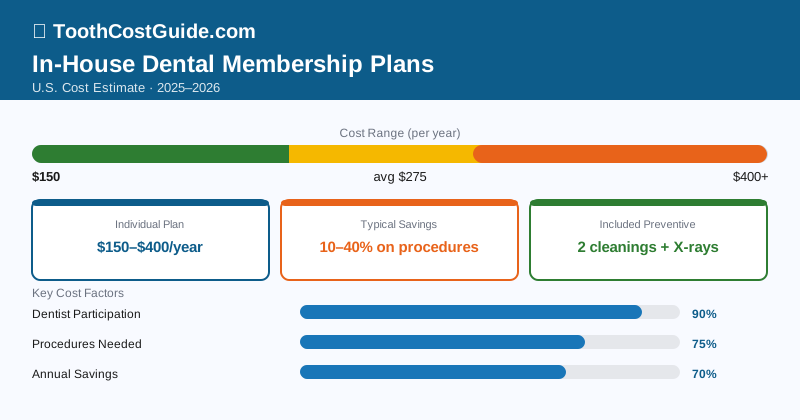
In-house dental membership plans — offered directly by dental practices as an alternative to insurance — cost $150–$400/year and typically include 2 free cleanings, exams, and X-rays plus 15–25% off all other procedures, delivering real value for uninsured patients without monthly premiums, waiting periods, or annual maximums. Over 25,000 dental practices now offer these plans, making them more accessible than ever.
| Membership Plan Component | Typical Inclusion | Market Average Value |
|---|---|---|
| Annual plan cost (individual adult) | $150–$400/year | — |
| Annual plan cost (child) | $100–$200/year | — |
| Annual plan cost (family of 4) | $400–$900/year | — |
| Included cleanings | 2 per year | $200–$380 value |
| Included comprehensive exam | 1–2 per year | $75–$150 value |
| Included X-rays (bitewing set) | Annual | $75–$150 value |
| Discount on restorative care | 15–25% off | Varies by treatment |
| Waiting period | None | — |
| Annual maximum | None (discount plan) | — |
How It Works
In-house dental membership plans (also called “office loyalty plans” or “dental savings plans”) are created and managed by individual dental practices. There is no insurance company involved — the dentist sets the fees, includes specific preventive services, and applies a discount to all other procedures.
How the business model works: The dental practice collects the annual membership fee, which largely covers the cost of the included preventive care. The discounts they offer on restorative procedures are funded by the reduction in overhead from not having to bill insurance — no claims processing, no EOB reconciliation, no write-offs from insurance adjustments. The practice also benefits from patient loyalty and predictable revenue.
Technology platforms: Many practices use platforms like Membersy, BoomCloud, DentalHQ, or Careington to manage their membership plans, handle billing, and provide patient portals. These platforms make it easier for practices to offer plans and for patients to track benefits.
No deductibles, no annual limits, no claims: Unlike traditional insurance, membership plans have no deductibles to satisfy, no annual maximums to manage, and no claims to file. The discount applies automatically at checkout.
Costs & Savings Details
Break-even analysis (individual adult, plan cost $299/year):
| Service | Standard Fee | Membership Price | Savings |
|---|---|---|---|
| Comprehensive exam | $150 | Included | $150 |
| Bitewing X-rays | $100 | Included | $100 |
| 2 adult cleanings | $200 | Included | $200 |
| 1 composite filling | $220 | $176 (20% off) | $44 |
| Total | $670 | $475 ($299 plan + $176 filling) | $195 |
With only preventive care + one filling, the membership plan saves $195 vs. paying full price — while costing only $299 vs. $670. The more restorative work needed, the greater the savings.
For patients needing a crown (year of plan + crown):
- Crown full fee: $1,500
- 20% discount: $300 savings on crown alone
- Plus free preventive care: $450 value
- Plan cost: $299
- Net benefit: $300 + $450 – $299 = $451 ahead
Comparison to dental insurance:
- Traditional dental insurance: $40–$60/month = $480–$720/year in premiums
- Annual maximum: $1,000–$1,500
- Waiting period: 6–12 months for major work
- In-house plan: $150–$400/year, no waiting period, no annual maximum
For patients with moderate dental needs, in-house plans often provide better value than individual dental insurance, which has high premiums relative to the benefits received by most patients.
Eligibility / Who Qualifies
In-house membership plans are available to:
- Any patient of the offering dental practice
- New patients who enroll before or at their first visit
- Adults, children, and families (typically at different rates)
There are no eligibility restrictions — no income test, no health screening, no credit check. Anyone can enroll.
Important caveat: The plan is only usable at the specific dental practice offering it. If you move, change dentists, or the practice closes, the plan has no transferable value.
Pros and Cons
Pros
- No waiting periods — discounts apply immediately
- No annual maximum — large cases (crowns, implants) get the discount regardless of total spend
- No claims to file — discount is automatic
- No insurance company involvement — simpler billing
- Typically lower annual cost than individual dental insurance premiums
- Builds a direct relationship with your dental practice
Cons
- Only usable at one dental office — not portable
- Discounts (15–25%) are less than what major insurance can provide for heavy dental users
- Value depends on the specific practice’s fee structure
- Not regulated as insurance — if the practice closes or cancels the plan, recovery options are limited
- Does not count as “dental coverage” for ACA or tax purposes
In-house dental membership plans are not insurance — they provide no coverage for dental catastrophes (e.g., accident requiring $15,000 in reconstruction), unlike comprehensive dental insurance. For patients with significant dental risk factors, consider whether an insurance supplement is also appropriate.
Step-by-Step Guide
Ask your current dentist if they offer an in-house plan: Simply ask at checkout or call the office manager: “Do you have an in-house dental membership or loyalty plan?” Many practices have these but don’t prominently advertise them.
If your dentist doesn’t offer one, search for plans nearby: Search “[City] dental membership plan” or “[City] dental savings plan.” Many practices list their plans on their websites. You can also search via DentalHQ (dentalhq.com) or similar directories.
Get the full plan details in writing: Specifically ask: (1) What preventive services are included? (2) What is the discount percentage on restorative and major procedures? (3) What is the annual fee? (4) Is there a family plan? (5) What happens if I cancel mid-year?
Calculate your personal break-even: Estimate your typical annual dental needs (2 cleanings, X-rays, fillings, etc.). Add up what you’d pay at full fee vs. plan cost + discounted fees. If the plan saves you money (which it usually does if you use preventive care), it’s worth it.
Enroll and schedule your included services: After enrolling, immediately schedule your 2 included cleanings for the year. Most plans run January–December or on an annual basis from your enrollment date. Use your included services — they’re the core value of the plan.
Use the discount for any needed restorative work: When scheduling fillings, crowns, or other procedures, confirm your membership discount is applied. Keep a copy of your membership agreement to verify the discount percentage.
Evaluate at renewal: Each year at renewal, assess whether you used enough services to justify the cost. For most patients who attend both cleanings, the preventive care value alone nearly equals the annual fee, making the restorative discounts pure upside.
If you’re searching for a new dentist and are uninsured, specifically look for practices that offer in-house membership plans. These practices are already oriented toward self-pay patients and tend to have more flexible billing, clearer fee schedules, and a stronger patient service focus. Searching “dental membership plan near me” or checking DentalHQ’s provider directory (dentalhq.com) will surface practices with established plans.
Bottom Line
In-house dental membership plans are one of the best-kept secrets in dental cost reduction. At $150–$400/year, they provide genuinely comprehensive preventive care with no waiting periods, no annual limits, and real discounts on restorative work — typically delivering more value than individual dental insurance for patients who need routine to moderate dental care. For the 74 million Americans without dental insurance, asking your dentist about a membership plan is the simplest first step toward affordable dental care.