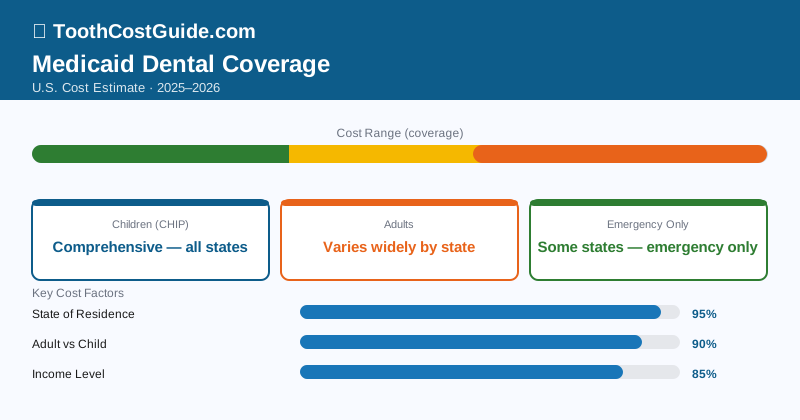
Children covered by Medicaid or CHIP receive comprehensive dental coverage at little or no cost in all 50 states — but adult Medicaid dental benefits vary dramatically, with some states covering almost nothing and others covering full preventive and restorative care. If you qualify for Medicaid, understanding what your state actually covers could save you thousands in dental costs annually.
| Coverage Level | States (approx.) | What’s Covered |
|---|---|---|
| Comprehensive adult coverage | ~18 states | Preventive, basic, major, often dentures |
| Limited adult coverage | ~16 states | Preventive + some basic (emergencies, extractions) |
| Emergency-only adult coverage | ~12 states | Extractions and pain relief only |
| No adult dental coverage | ~4 states | Nothing (except federally mandated emergencies) |
| Children/CHIP (all states) | 50 states | Full preventive + restorative dental |
How Medicaid Dental Coverage Works
Medicaid is a joint federal-state health insurance program for low-income Americans. The federal government sets minimum standards but gives states significant flexibility in designing the dental benefit package. The result is a patchwork of coverage that varies enormously depending on where you live.
Federal minimum requirements for adults: The federal government does not mandate dental coverage for adults in Medicaid. States must cover emergency dental services (procedures necessary to relieve pain and infection), but that’s the only hard federal requirement for adult dental benefits. Everything else — routine cleanings, fillings, crowns, dentures — is optional and state-funded.
Children’s coverage under CHIP and Medicaid: The story is completely different for children. Federal law requires that children enrolled in Medicaid receive “Early and Periodic Screening, Diagnostic, and Treatment” (EPSDT) services, which include comprehensive dental care. This means all medically necessary dental treatment must be covered for children — including cleanings, fluoride treatments, sealants, fillings, extractions, and orthodontics when medically necessary.
Medicaid managed care: In most states, Medicaid beneficiaries are enrolled in managed care plans (HMO-style plans) that contract with the state. Dental benefits may be “carved out” to a separate dental plan. You may receive a separate dental ID card or need to call your managed care plan to find out who administers your dental benefits.
If your children are on Medicaid or CHIP, dental care should be nearly free and comprehensive. For adults, check your specific state’s Medicaid dental coverage level before assuming you’re covered — many states provide little more than emergency extractions.
Costs & Coverage Details by State
States with comprehensive adult dental Medicaid coverage (including most restorative and preventive care) include California, New York, Massachusetts, Minnesota, Oregon, Washington, Vermont, Connecticut, and about ten others. In these states, covered adults can access cleanings, X-rays, fillings, crowns, extractions, and often dentures — typically with no premium and copays of $0–$5 per visit.
States with limited adult coverage — including Texas, Ohio, Michigan, and others — cover only preventive care and emergency or medically necessary procedures. A filling for a painful tooth may be covered; a crown to save a tooth may not be, leading to unnecessary extractions.
States with emergency-only adult Medicaid dental include Alabama, Tennessee, Mississippi, and several others. In these states, the only covered dental service for adults is an extraction to relieve pain or control infection. Preventive care, fillings, and crowns are not covered. Many adults in these states end up losing salvageable teeth because fillings aren’t covered.
Sample copays for covered adults:
- Exam: $0–$3
- Cleaning (prophylaxis): $0–$5
- Filling: $0–$5
- Extraction: $0–$5
- Denture (complete): $0–$10 in comprehensive-coverage states
Children’s coverage specifics: Under CHIP/Medicaid, children receive:
- Two cleanings and exams per year (free)
- Fluoride varnish and sealants (free)
- Fillings and restorations (free)
- X-rays as needed (free)
- Orthodontics when medically necessary (free; eligibility determined by handicapping malocclusion index)
- Copays: generally $0 for most children, with a maximum of $3.40 per service for some higher-income CHIP enrollees
Pros and Cons of Medicaid Dental
Pros:
- Little or no out-of-pocket cost for covered services
- Children receive comprehensive care that prevents costly adult dental problems
- No premium for most enrollees
- Can be a lifeline for low-income adults in comprehensive-coverage states
- Emergency services available nationwide regardless of state coverage level
Cons:
- Provider shortages: only about 40–45% of dentists nationally accept Medicaid due to low reimbursement rates
- Coverage gaps in many states leave adults without basic care
- Annual limits even in comprehensive states (some cap at $500–$1,000 per year for adults)
- Prior authorization required for many procedures, adding delays
- Managed care plan coordination can be confusing
Medicaid reimbursement rates for dentists are typically 30–50% below private insurance rates. This means many dentists don’t accept Medicaid patients, and those who do may have long wait times. Call ahead to confirm a dentist accepts your specific Medicaid plan before making an appointment.
Who It’s Best For
Low-income children benefit enormously from Medicaid/CHIP dental coverage. Early preventive care through these programs has been shown to reduce lifetime dental costs significantly. If your family income qualifies (up to 200–300% of the federal poverty level for CHIP in many states), enrolling children is a clear priority.
Low-income adults in comprehensive-coverage states should maximize their Medicaid dental benefits before considering supplemental insurance. Regular cleanings and fillings covered at near-zero cost can prevent expensive emergencies.
Low-income adults in limited or emergency-only states should know that Medicaid dental likely won’t cover the routine care they need. Federally Qualified Health Centers (FQHCs) and dental schools offer sliding-scale fees as a supplement to emergency Medicaid.
How to Save Money with Medicaid Dental
Find Medicaid-accepting dentists through your state’s portal. Every state Medicaid program has a provider directory. Search by zip code to find the nearest accepting dentists. For children’s care, dental schools often accept Medicaid and have shorter wait times.
Use Federally Qualified Health Centers (FQHCs). These federally funded community health centers are required to serve all patients regardless of ability to pay, and they accept Medicaid. They offer sliding-scale fees for services Medicaid doesn’t cover. Find locations at findahealthcenter.hrsa.gov.
Request prior authorization early. If you or your child needs a procedure that requires prior authorization (crowns, orthodontics), submit the request well in advance. Delays in authorization can push back treatment by weeks.
Know your appeal rights. If Medicaid denies a dental claim, you have the right to appeal. For children, EPSDT requires coverage for any medically necessary dental service — if a dentist recommends orthodontics as medically necessary, Medicaid must cover it if properly documented.
Check enrollment in your state. Medicaid income thresholds vary widely. In expansion states (those that expanded Medicaid under the ACA), adults earning up to 138% of the federal poverty level ($20,120 for a single adult in 2025) qualify. In non-expansion states, limits are much lower and adult coverage may be very restricted.
Medicaid dental is excellent for children in every state and for adults lucky enough to live in the 18 or so states with comprehensive adult coverage. For the majority of adult Medicaid recipients, coverage is limited at best. Know your state’s specific benefits, and use FQHCs and dental schools to fill the gaps.
Bottom Line
Medicaid dental coverage is a tale of two groups: children get comprehensive care in all 50 states, while adult coverage ranges from excellent to nonexistent depending on the state. About 18 states offer comprehensive adult dental benefits; others limit coverage to emergencies or nothing at all. If you’re on Medicaid, call your plan to understand exactly what dental services are covered, find a Medicaid-accepting dentist early (they’re in short supply), and use Federally Qualified Health Centers to fill coverage gaps.