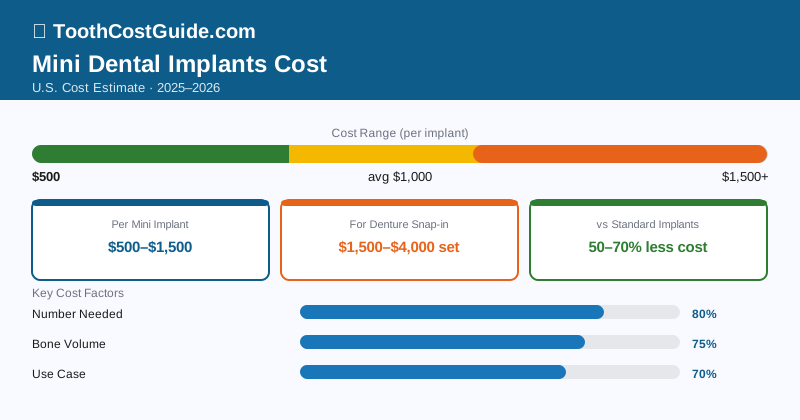
Mini dental implants cost $500–$1,500 per implant, compared to $1,500–$3,000 for a standard implant. The smaller diameter of mini implants (less than 3mm vs. 3.5–5mm for standard) allows for less invasive placement — often without bone grafting — and faster healing. Most commonly used to stabilize lower dentures, mini implants can also serve as single-tooth replacements in narrow spaces. They’re not appropriate for every patient or every clinical situation, and understanding their limitations is as important as understanding their cost advantages.
Mini Implant Costs by Use Case
| Procedure | Cost |
|---|---|
| Single mini implant (tooth replacement) | $500–$1,500 |
| Mini implant for denture stabilization (2 implants) | $1,000–$2,500 total |
| Mini implant denture stabilization (4 implants) | $2,000–$4,500 total |
| Standard dental implant (for comparison) | $1,500–$3,000 per implant |
| Denture modification for mini implant attachments | $200–$600 |
| New implant-supported denture (with 4 mini implants) | $3,000–$6,500 total |
| Bone graft (if still required) | $200–$600 per site |
What Affects the Cost of Mini Dental Implants
Number of implants placed. Unlike standard implants, which typically have one implant per missing tooth, mini implants for denture stabilization use 2–6 implants to support an entire arch. Most lower denture stabilization cases use 4 mini implants — the most common and well-studied configuration. The per-implant cost is lower than standard implants, but the total cost adds up when multiple are placed.
Single-tooth replacement vs. denture stabilization. Mini implants used as a single-tooth replacement in a narrow space (like a lower incisor gap) involve just one implant plus a crown — total cost $800–$2,000. Denture stabilization cases involve multiple mini implants plus modification of an existing denture or fabrication of a new one. Understand which use case applies to your treatment.
Whether the existing denture is compatible. If you already have well-fitting dentures that simply need stabilization, your dentist may be able to modify them to accept the locator attachments used with mini implants — adding $200–$600 to the denture. If you need new dentures as well, add $1,000–$3,000 for the prosthesis.
Dentist vs. specialist. Mini implants are placed by general dentists, oral surgeons, and periodontists. General dentists trained in the procedure typically charge $500–$1,000 per mini implant. Oral surgeons may charge more ($800–$1,500 per implant) but bring surgical expertise for complex cases. For straightforward denture stabilization cases, an experienced general dentist is often appropriate and more affordable.
Mini implants are not a universally superior alternative to standard implants — they’re a clinically appropriate tool for specific situations: narrow bone spaces, denture stabilization, patients who cannot tolerate more invasive surgery, or patients for whom cost is a significant factor. For single-tooth replacement in adequate bone, a standard implant typically has better long-term data and survival rates.
Mini Implants vs. Standard Implants
Diameter. Standard implants range from 3.5–5mm in diameter. Mini implants are under 3mm (most commonly 1.8–2.9mm). The smaller diameter means less bone contact surface, which affects the strength and long-term load-bearing capacity.
Bone requirements. Standard implants require adequate bone width — often requiring bone grafting if width is insufficient. Mini implants can be placed in narrower ridges, making them accessible to patients who would need grafting for standard implants. This is one of their primary clinical advantages.
Invasiveness and healing time. Standard implant placement requires a full incision and often several months of osseointegration before loading. Mini implants are often placed with a minimally invasive flapless technique (no incisions) and can sometimes be loaded immediately or within days. The simpler procedure appeals to patients who want to avoid lengthy healing periods.
Longevity and evidence base. Standard implants have decades of long-term clinical data with reported survival rates of 95–98% at 10 years. Mini implants have a shorter published track record, particularly for single-tooth replacement under full occlusal load. For denture stabilization, where load is distributed across multiple implants and the denture can be removed for cleaning, mini implants have a solid evidence base.
Long-term maintenance. Standard implants, when properly maintained, can last 20–30 years. Mini implants may have higher replacement rates, particularly for single-tooth applications under heavy load. When a mini implant fails, replacement is typically straightforward — a new mini implant can often be placed in the same or adjacent site.
With vs. Without Dental Insurance
Insurance coverage for mini implants follows the same general pattern as standard implants: limited to non-existent under most traditional plans.
With dental insurance: Standard dental insurance typically excludes implants entirely or covers them with significant limitations. The same exclusions apply to mini implants. Some newer premium plans offer implant benefits, but annual maximums ($1,000–$3,000) rarely cover the full cost of even a single mini implant case.
Denture benefits. If your treatment plan involves new implant-supported dentures, the denture portion itself may be covered under your plan’s prosthetic benefits — typically 50% of allowed cost. Submit the denture claim and mini implant claims separately; you may recover costs on the denture component even if the implants themselves are not covered.
Without insurance: At $500–$1,500 per mini implant, mini implants are significantly more accessible than standard implants for uninsured patients. A four-mini-implant denture stabilization case at $2,000–$4,500 total is far more attainable than a standard implant case, which would run $6,000–$12,000 for the same number of implants.
Submit your treatment plan to insurance before proceeding. Some plans have expanded implant benefits that patients don’t know about. Even a partial reimbursement of $500–$1,000 is meaningful. Ask your dentist’s billing team to use the most favorable coding (standard implant codes may apply) and to submit a narrative explaining the clinical necessity.
How to Save Money on Mini Dental Implants
Compare general dentists to specialists. For routine denture stabilization cases in a patient with adequate bone, an experienced general dentist with implant training can perform mini implant placement at $500–$900 per implant — $200–$600 less than specialist fees. Verify the dentist’s training (look for AAID, ICOI, or manufacturer-specific mini implant certification) and ask how many mini implant cases they’ve completed.
Dental school implant clinics. Dental schools and oral surgery programs place mini implants at 40–60% reduced cost. For a four-implant lower denture stabilization case, dental school pricing may run $1,200–$2,500 total compared to $2,500–$4,500 at a private office. The trade-off is time: dental school cases move slowly, with multiple appointments and longer chair time.
Ask about existing denture modification vs. new denture. If your existing dentures fit well and are in good shape, modifying them to accept mini implant attachments is far less expensive than fabricating new dentures. Make sure your dentist evaluates whether modification is feasible before quoting a new prosthesis.
Get multiple quotes. Mini implant pricing varies significantly between providers in the same market. Get 2–3 consultations to understand the price range. Some practices offer free “denture stabilization” consultations.
Ask about package pricing. Many practices that specialize in denture stabilization offer package prices for exam, CBCT, placement of multiple mini implants, and denture modification — priced as a total case rather than individual components. Package pricing is usually more favorable than itemized billing.
Financing Options
Mini implants are more affordable than standard implants, but costs still reach $2,000–$5,000 for full-arch denture stabilization cases, making financing common.
CareCredit. Accepted at most dental and oral surgery offices. For a $3,000 mini implant case, the 0% promotional period (typically 18–24 months) means monthly payments of $125–$167 with no interest if paid in full. The deferred interest clause applies at most dental offices — understand this before signing.
In-house payment plans. Many practices offering denture stabilization have their own in-house payment plans, particularly practices targeting denture patients (often older adults on fixed incomes). These plans may be more flexible than third-party financing. Ask specifically whether a no-interest in-house plan is available.
HSA/FSA. Mini dental implants are qualified medical expenses eligible for HSA and FSA funds. Even if you can’t cover the full amount with these accounts, paying what you can from pre-tax funds reduces your effective cost.
Sunbit. A newer dental financing option available at many practices, Sunbit uses a quick approval process and has more transparent interest terms than CareCredit for longer-term financing. Rates vary based on credit profile but can be competitive for 12–36 month terms.
Bottom Line
Mini dental implants at $500–$1,500 per implant offer a genuinely lower-cost alternative to standard implants, particularly for denture stabilization where they have a strong clinical evidence base. For older adults with dentures that shift and slip, mini implants provide a life-changing improvement in confidence and chewing ability at a fraction of the full All-on-4 cost.
Standard implants remain the preferred choice for single-tooth replacement where bone volume is adequate and maximum long-term durability is the goal. Mini implants make the most sense for denture stabilization, patients with limited bone, and patients for whom a less invasive procedure is important.
Always choose a provider with documented mini implant experience, and ask to see before-and-after cases or patient references. A well-placed mini implant in the right clinical scenario delivers excellent outcomes — the key is matching the technique to the patient.
Dental cost estimates in this guide reflect U.S. national averages for 2024–2025 and may vary significantly by geographic region, provider type, and individual treatment needs. Mini implant suitability depends on bone quality, bite forces, and the intended prosthesis — consult with a qualified dental professional to determine whether mini implants are appropriate for your specific situation.