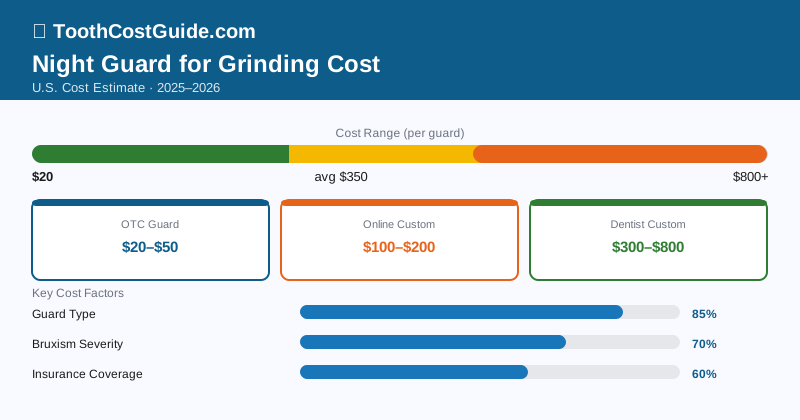
A custom dental night guard costs $300–$800 from a dentist or orthodontist. Over-the-counter (OTC) boil-and-bite guards from pharmacies cost $20–$50. Online custom night guards made from home impressions split the difference at $100–$200. If you grind or clench your teeth (bruxism), the right type of night guard depends on how severe your grinding is, whether you have TMJ symptoms, and your budget.
| Night Guard Type | Cost |
|---|---|
| OTC boil-and-bite guard (pharmacy) | $20–$50 |
| OTC prefabricated soft guard | $15–$40 |
| Online custom guard (home impression) | $100–$200 |
| Custom hard acrylic guard (from dentist) | $300–$800 |
| Custom soft guard (from dentist) | $200–$400 |
| Custom dual-laminate guard (hard outside, soft inside) | $300–$600 |
| Custom guard through orthodontist (TMJ-specific) | $400–$800 |
| Replacement guard (if original molds kept on file) | $200–$400 |
What Affects Night Guard Cost
Custom vs. OTC. Custom guards are fabricated by a dental lab from precise impressions or digital scans of your teeth. They fit exactly, last 3–10 years with proper care, and are the most effective at protecting against grinding damage. OTC guards are generic sizes (often too thick or imprecise) that offer basic protection but may feel bulky and are less effective for heavy grinders.
Material (hard vs. soft vs. dual-laminate). Hard acrylic guards are the most durable and the most recommended by dentists for heavy grinders. Soft guards feel more comfortable initially but can be destroyed quickly by heavy clenching — some heavy grinders actually clench harder against a soft guard. Dual-laminate guards (hard outer shell, soft inner lining) balance comfort and durability.
Lab fabrication fees. Dental labs charge $75–$200 for custom night guard fabrication. This cost is factored into the dentist’s fee. Higher-quality labs using thicker acrylic and better fit verification charge more.
Dental office overhead. Urban offices in high-cost markets charge more than suburban or rural practices. The fee also includes the impression appointment, try-in appointment, and any adjustments.
Types of Night Guards and Who Should Use Each
OTC Boil-and-Bite Guards ($20–$50): Soft thermoplastic material softened in hot water, shaped to the teeth by biting. Provides basic protection for light grinders. High bulk and imprecise fit causes discomfort and difficulty sleeping for many users. Not recommended for heavy grinders or patients with TMJ symptoms. Best for: budget-conscious mild grinders, travel backup, testing whether you’ll tolerate wearing a guard before investing in custom.
Online Custom Guards ($100–$200): Home impression kits mailed to your home. You take impressions, mail them back, and receive a custom guard in 2–3 weeks. Popular services include Chomper Labs ($149–$179) and Smile Brilliant ($149–$190). Quality is significantly better than OTC due to custom fit from your actual tooth impressions. Best for: mild-to-moderate grinders who want custom fit at lower cost and are comfortable taking accurate home impressions.
Custom Soft Guard from Dentist ($200–$400): Lab-fabricated from a flexible EVA material using professional impressions. More comfortable than hard guards but less durable. Not recommended for heavy or severe grinders — soft material doesn’t resist heavy clenching forces adequately. Best for: light grinders, patients with tooth sensitivity who find hard guards uncomfortable.
Custom Hard Acrylic Guard from Dentist ($300–$800): The clinical gold standard for bruxism management. Precisely fit, 2–4mm of hard acrylic. Distributes grinding forces evenly across all teeth, preventing the focused wear that damages enamel. Lasts 3–10 years with proper care. Required for heavy grinders, patients with significant tooth wear, or those with TMJ symptoms. Best for: moderate-to-severe grinders, anyone with measurable enamel wear, TMJ patients.
Dual-Laminate Guard ($300–$600): Hard acrylic outer layer with a soft inner lining. Combines the comfort advantage of soft material against the gums with the durability of hard acrylic on the biting surface. A good option for patients who want the effectiveness of a hard guard with improved comfort.
If you’re a heavy grinder (you wake with jaw soreness, your spouse hears you grinding, or your dentist shows you significant tooth wear), invest in a custom hard acrylic guard from your dentist. OTC guards are insufficient for heavy grinding and may actually worsen clenching. The $400–$800 upfront cost prevents thousands in enamel damage, crown replacement, and TMJ treatment.
Signs You Need a Night Guard
- Waking with jaw soreness, headache, or facial muscle tightness
- Audible tooth grinding reported by a bed partner
- Flat, worn-looking tooth surfaces visible in the mirror
- Tooth sensitivity (especially to cold) in otherwise healthy teeth
- Cracked teeth or chipped enamel without obvious trauma
- Indentations on the sides of the tongue (scalloping)
- TMJ clicking, popping, or jaw pain
Your dentist can identify signs of bruxism during routine examinations — characteristic wear patterns on the biting surfaces of teeth are often the first diagnostic indicator.
Insurance Coverage for Night Guards
Dental insurance: Many dental plans cover custom night guards under the basic services or major services benefit when prescribed for bruxism or TMJ. Coverage is typically 50–80% of the allowable fee after your deductible, subject to the annual maximum.
Medical insurance: If the night guard is prescribed specifically for TMJ disorder management, it may be coverable under medical insurance as a TMJ treatment device. This requires a medical diagnosis and documentation of functional necessity. Billing under the medical plan can achieve better coverage in some cases.
What to ask your dentist: Have them submit a predetermination of benefits to your dental insurer before fabricating the guard. This confirms coverage and the expected patient portion before you commit.
Some insurance plans cover custom night guards only once every 5–7 years. If you’ve used the benefit recently and need a replacement, you may face the full cost out of pocket. Check your plan’s frequency limitation before assuming coverage.
Financing Options
Pay at time of service: Most patients pay for night guards at the appointment when the guard is delivered. Credit card, FSA/HSA, or check.
FSA/HSA: Custom night guards prescribed for bruxism or TMJ are fully FSA/HSA eligible. For a $500 guard, FSA savings of 22–37% ($110–$185) make a meaningful difference.
Online services: Most online custom guard services accept credit cards and offer standard checkout financing. Amounts are low enough that formal financing is rarely needed.
How to Make Your Night Guard Last
Clean daily. Rinse with cool water after every use. Use a soft toothbrush with dish soap or a retainer cleaning tablet weekly. Never use hot water (warps acrylic).
Store in the provided case. Exposure to air and heat can warp or crack acrylic guards. Always store in the case when not in use.
Don’t grind without it. Wearing the guard consistently every night — not just some nights — produces the best results. Inconsistent use doesn’t adequately protect enamel or reduce jaw muscle strain.
Bring it to dental checkups. Your dentist can check for wear, verify proper occlusion, and assess whether adjustment or replacement is needed.
How to Save on Night Guards
Check dental insurance first. If your plan covers 50–80% of the cost after deductible, a $500 guard might cost you $100–$250 out of pocket.
Try an online service for mild grinding. If your dentist confirms mild bruxism and your case doesn’t involve TMJ symptoms, an online custom guard ($149–$190) provides professional-fit quality at 40–70% less than the dental office fee.
Ask about dental school clinics. Dental schools often provide custom night guards at reduced rates, since fabrication is a common restorative/prosthodontic clinical exercise.
Use FSA funds. Even if insurance doesn’t cover the guard, paying from an FSA saves 22–37% in federal taxes on the amount spent.
Bottom Line
Custom dental night guards cost $300–$800 and are the most effective protection for moderate-to-severe teeth grinders. OTC guards at $20–$50 suffice for mild grinding when budget is the primary concern. Online custom guards at $100–$200 offer a middle-ground option for mild-to-moderate cases. Dental insurance covers custom guards under basic or major services benefits (50–80% of cost) for many plans. Using FSA funds for the patient portion maximizes savings. The $500 investment in a quality custom guard routinely prevents $3,000–$10,000 in crown and enamel damage from untreated severe bruxism.
Severe bruxism causes irreversible enamel damage, cracked teeth, and TMJ problems. A custom hard acrylic guard at $300–$800 is among the best dental investments available. Check insurance coverage first, use FSA funds for the patient portion, and consider online custom guards as a cost-effective option only if your grinding is mild and TMJ symptoms are absent.