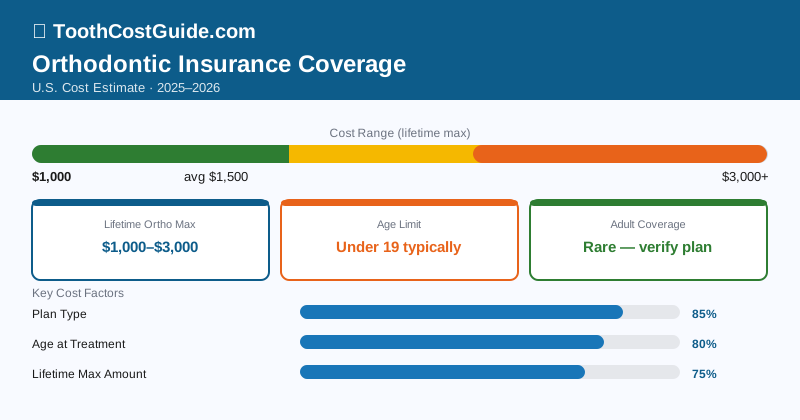
Most dental insurance plans with orthodontic benefits cover 50% of orthodontic treatment costs up to a lifetime maximum of $1,000–$3,000. This maximum is separate from the plan’s annual dental maximum and applies once per lifetime per covered patient. Age limits typically restrict coverage to patients under 18–19, though some employer plans extend adult orthodontic benefits. Understanding exactly how your plan works before starting treatment can mean the difference between a $1,500 insurance benefit and getting nothing at all.
| Coverage Component | Typical Range |
|---|---|
| Lifetime orthodontic maximum (children) | $1,000–$3,000 |
| Lifetime orthodontic maximum (adults, if covered) | $500–$2,000 |
| Coverage percentage | 50% (standard) |
| Age limit for children’s coverage | 18–19 (most plans) |
| Waiting period for ortho benefits | 0–12 months |
| Deductible for orthodontic treatment | $0–$100 (varies) |
| Coverage for Invisalign | Same as braces (most plans) |
| CHIP orthodontic coverage (medically necessary) | Varies by state |
How Orthodontic Insurance Benefits Work
Orthodontic benefits are structured differently from regular dental benefits in three key ways:
1. Lifetime maximum, not annual maximum. Your annual dental maximum ($1,000–$2,000 typically) resets each January. The orthodontic lifetime maximum ($1,000–$3,000) does NOT reset. It’s a one-time benefit per covered person. Once used, it’s gone — even if you switch insurance plans.
2. Paid over the course of treatment. Most insurance companies don’t pay the entire orthodontic benefit upfront. Instead, they pay a portion at case banding (start), then monthly payments over the treatment period. This mirrors the installment structure most orthodontists use. A plan with a $1,500 maximum for 24-month treatment might pay $62.50/month.
3. Separate from the regular dental benefit. Orthodontic coverage is a separate benefit that must exist in your plan. Not all dental plans include orthodontic coverage. A standard Delta Dental PPO, for example, may include orthodontic benefits; a bare-bones dental plan may not.
What Determines Your Orthodontic Benefit
Check your Summary of Benefits and Coverage (SBC). This document, required under the ACA for employer-sponsored plans, lists all benefits including orthodontic coverage, the lifetime maximum, the coverage percentage, age limits, and any waiting periods. It’s the most accurate source.
Terms to look for:
- “Orthodontia” or “Orthodontic treatment”
- “Lifetime maximum” or “Orthodontic maximum”
- “Class IV services” (many plans classify orthodontics as Class IV)
- Age limit or “dependent age limit for orthodontic coverage”
- “Waiting period” for orthodontic benefits
The orthodontic lifetime maximum is the most important number. A $1,500 lifetime maximum means that’s the maximum the plan will ever pay for orthodontic treatment — not $1,500/year. If your family has three children who all need braces, the $1,500 maximum applies once per child (not collectively), but it’s finite for each child and never resets.
Age Limits for Orthodontic Coverage
Under 18: Virtually all dental plans that include orthodontic benefits cover patients under 18. Some plans set the limit at 19 or 21 to align with dependent status rules.
Ages 18–26 (dependents): Under the ACA, dependents can remain on a parent’s health insurance until age 26. However, dental insurance may or may not extend orthodontic coverage this far — it depends on the specific dental plan, not health insurance rules. A dependent at age 22 may have health insurance coverage but not dental orthodontic benefits past age 18.
Adult orthodontics (26+): This is where most plans fall short. The majority of employer-sponsored dental plans do not cover orthodontic treatment for adults over 18–26. Exceptions include:
- Some premium employer benefits packages
- Union-negotiated dental plans
- Certain individual market dental plans (especially through healthcare exchanges)
- Plans specifically marketed as including adult orthodontic coverage
What to do: If you’re an adult considering orthodontic treatment, call the member services number on your dental insurance card and ask specifically: “Does my plan cover orthodontic treatment for adults over age 26? What is the lifetime maximum and coverage percentage?”
Waiting Periods
Some dental plans impose a waiting period before orthodontic benefits begin — typically 6–12 months from the effective date of coverage. This prevents people from signing up for dental insurance specifically to use the orthodontic benefit and canceling after treatment.
Implication: If you just enrolled in a new dental plan with a 12-month orthodontic waiting period, wait until the waiting period ends before starting treatment — otherwise you won’t receive any orthodontic benefits.
Exception: If orthodontic treatment was already in progress when your new plan began, some plans will cover the remaining treatment. Others exclude “treatment in progress.” Always verify with the new insurer before assuming coverage.
What Orthodontic Insurance Does and Doesn’t Cover
Typically covered:
- Traditional metal braces (comprehensive)
- Ceramic braces (up to the same allowable fee as metal)
- Invisalign and other in-office clear aligners (same terms as braces at most plans)
- Phase 1 early orthodontic treatment
- Phase 2 comprehensive treatment
- Necessary palate expanders
Typically not covered:
- Retainers after treatment (often excluded as maintenance)
- Replacement retainers for lost/broken appliances
- Cosmetic-only procedures
- Direct-to-consumer aligners (Byte, etc.) — not supervised by an in-network provider
- Whitening after orthodontic treatment
- Treatment the plan deems purely cosmetic
Many plans state they cover “orthodontia” but define it as treatment for “functional necessity” rather than cosmetic alignment. In practice, most orthodontic cases are approved — but if your plan denies a claim as cosmetic, you can appeal with documentation from your orthodontist showing functional impairment (difficulty chewing, speech issues, etc.).
CHIP and Medicaid Orthodontic Coverage
Children and teens who qualify for Medicaid or the Children’s Health Insurance Program (CHIP) may have orthodontic coverage when treatment is “medically necessary.”
Medically necessary criteria (varies by state):
- Severe malocclusion score (many states use the Handicapping Labio-lingual Deviation — HLD — index)
- Cases with documented functional impairment (chewing, speech, breathing)
- Cleft palate and craniofacial conditions
- Cases scoring above a threshold on a standardized severity scale
Cosmetic or mild orthodontic treatment is not covered. State Medicaid orthodontic programs often have waiting lists. Contact your state’s Medicaid program for specific eligibility requirements.
Maximizing Your Orthodontic Insurance Benefit
1. Start treatment before the lifetime maximum is used elsewhere. If multiple family members need braces, coordinate timing to ensure each person’s lifetime maximum is available when needed.
2. Don’t wait past the age limit. If a plan covers orthodontics through age 18 and your teenager turns 18 in 6 months, start treatment now or risk losing the benefit.
3. Submit a predetermination of benefits. Before starting treatment, have your orthodontist submit a pre-treatment estimate to your insurer. This confirms the expected coverage amount in writing before you commit to a payment plan.
4. Apply the benefit to the most expensive treatment option. If you’re choosing between metal braces ($4,500) and Invisalign ($5,500), the $1,500 insurance maximum applies to either — but leaves you with $3,000 out-of-pocket for metal vs. $4,000 for Invisalign. Factor this into your choice.
5. Use FSA funds for the remainder. After the insurance benefit is applied, use FSA dollars to cover the out-of-pocket portion. The combination of insurance + FSA provides the deepest discount on orthodontic treatment.
Financing Options
In-office payment plans + insurance coordination: Most orthodontic offices bill your insurance directly and apply payments to your account as they receive them. Your monthly installment is based on the patient portion after insurance.
FSA/HSA: Fully eligible for the patient-paid portion. Maximize FSA elections before the treatment year.
CareCredit: Available for the patient portion not covered by insurance.
Bottom Line
Orthodontic insurance pays 50% up to a $1,000–$3,000 lifetime maximum for most covered patients under 18. Adult coverage is the exception, not the rule. The lifetime maximum does not reset, waiting periods can delay benefits, and not all treatment types are covered equally. Before starting any orthodontic treatment, review your Summary of Benefits, verify the lifetime maximum and remaining balance, confirm the age limit, and have your orthodontist submit a predetermination of benefits. These steps take 20 minutes and can clarify thousands of dollars of expected out-of-pocket costs.
Get a predetermination of benefits from your insurer before starting treatment — it takes one request from your orthodontist’s billing department and tells you exactly how much the insurer will pay. Never assume coverage; verify it in writing. The lifetime maximum is the most important number to confirm, especially if any orthodontic benefits were used in childhood.