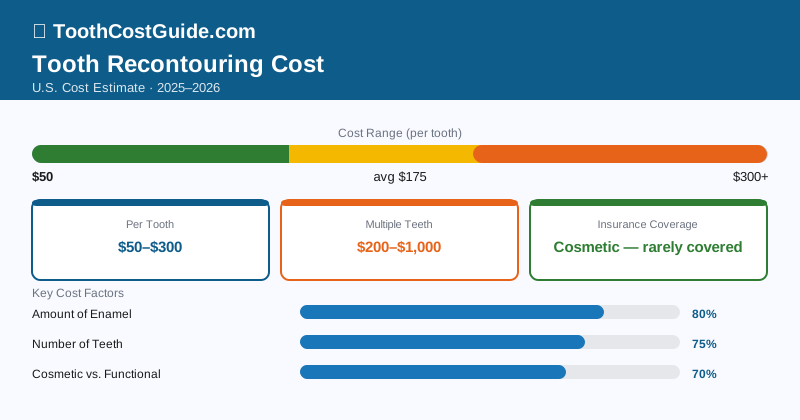
Tooth recontouring — also called dental contouring, odontoplasty, or enameloplasty — costs $50–$300 per tooth in the United States. This quick, minimally invasive cosmetic procedure uses dental burs and polishing instruments to reshape, smooth, or reduce enamel — rounding pointed tips, shortening slightly long teeth, smoothing chipped edges, or improving the overall shape of a smile. It requires no anesthesia in most cases, no lab fees, and is often completed in a single appointment. It’s one of the most affordable cosmetic dental procedures available.
Tooth Recontouring Costs by Scenario
| Procedure Scenario | Cost |
|---|---|
| Single tooth recontouring (minor chip or edge) | $50–$150 |
| Single tooth recontouring (more substantial reshaping) | $150–$300 |
| Multiple teeth (smile enhancement, 4–6 teeth) | $300–$1,200 |
| Recontouring combined with dental bonding | $200–$500 per tooth |
| Full smile recontouring (8–10 front teeth) | $600–$2,000 |
| Recontouring after braces (bite refinement) | $100–$400 |
| Enameloplasty for bite/occlusal adjustment | $50–$200 per tooth |
What Affects the Cost of Tooth Recontouring
Amount of enamel being removed. Minor smoothing of a chip or slightly rough edge takes a few minutes and costs $50–$100. Reshaping a noticeably long, pointed, or asymmetrical tooth requires more careful contouring and polishing — a 15–30 minute procedure at $150–$300. The procedure is inherently limited by enamel thickness: too much removal risks exposing dentin, causing sensitivity. Most recontouring removes less than 1mm of enamel.
Number of teeth treated. Recontouring is priced per tooth. Treating one tooth costs $50–$300; treating six to eight front teeth for a smile makeover costs $300–$2,000 total. Some dentists offer a per-visit flat fee for minor cosmetic recontouring of multiple adjacent teeth, which can be more economical than per-tooth pricing when many small adjustments are needed.
Whether bonding is combined with contouring. Recontouring removes tooth structure. When a tooth has a deep notch, significant asymmetry, or is too short (rather than too long), dental bonding (adding composite resin) is needed alongside or instead of contouring. Combined recontouring and bonding costs $200–$500 per tooth — more than contouring alone but less than a veneer.
Dentist vs. cosmetic dentist specialist. General dentists and cosmetic dentists both perform recontouring. Dentists marketing themselves as “cosmetic specialists” (note: cosmetic dentistry is not an ADA-recognized specialty) often charge premium prices of $200–$300 per tooth even for minor work. General dentists with solid cosmetic experience may charge $50–$150 for the same result. Ask to see before-and-after photos from prior recontouring cases regardless of the provider’s marketing claims.
Tooth recontouring is one of the most cost-effective smile improvements available. Minor chips, uneven edges, and slightly pointed canines can often be transformed in one appointment for under $200 total. For patients considering veneers ($900–$2,500 per tooth), recontouring is worth exploring first — it can achieve excellent results when the underlying tooth shape is good and only subtle adjustment is needed.
Cost by Use Case and Complexity
Minor chip or rough edge repair. The most common and least expensive application. A single small chip that creates a sharp or uneven edge is smoothed and polished in 5–10 minutes. No anesthesia needed. Cost: $50–$150. This is the kind of work that may be done at the end of a regular cleaning appointment at minimal additional charge.
Shortening a too-long tooth. One central incisor that’s noticeably longer than its neighbor can be shortened through careful recontouring to achieve symmetry. Requires more attention to shaping and proportioning, particularly to maintain the natural curvature of the incisal edge. Cost: $100–$250.
Rounding pointed canines. Some patients have naturally pointed canine teeth that look sharp or aggressive. Recontouring rounds the tip to a softer profile without removing significant tooth structure. A popular and simple cosmetic procedure. Cost: $75–$200 per canine.
Smile makeover recontouring (multiple teeth). A dentist uses photographs, smile analysis, and digital design to plan and execute recontouring of 6–10 front teeth to improve overall smile proportions. This requires more planning and skill than single-tooth adjustments. Often combined with bonding on some teeth. Cost: $600–$2,000 total. Less invasive and far less expensive than veneers for the same teeth ($5,000–$25,000 for a comparable veneer case).
Occlusal (bite) adjustment. After dental work or orthodontic treatment, specific points on back teeth may need to be reduced for proper bite alignment. This is a functional rather than cosmetic application of the same technique. Cost: $50–$200 per tooth adjusted. Sometimes included in the fee for the original restorative work that altered the bite.
With vs. Without Dental Insurance
Tooth recontouring is largely considered a cosmetic procedure, and cosmetic dental procedures are excluded from virtually all dental insurance plans.
With insurance: If recontouring is performed for functional reasons — to smooth a cracked tooth edge that was causing soft tissue irritation, to adjust an occlusal high spot after a filling, or to address a tooth that’s causing a bite problem — some of the work may be covered. The key is documentation: the dentist must code and describe the procedure in functional terms, not cosmetic ones.
For purely cosmetic reshaping: Coverage is essentially zero under standard dental insurance. Dental plans explicitly exclude “cosmetic” procedures in their benefit descriptions.
Combined with other covered work: If a chipped tooth needs both recontouring (cosmetic) and a small restoration (covered), the restoration may be covered at 70–80% while the recontouring component is patient-pay. Ask your dentist how they’ll code the work.
Without insurance: At $50–$300 per tooth, recontouring is affordable even for uninsured patients. The per-tooth cost is a fraction of bonding ($200–$600) or veneers ($900–$2,500), and for the right case, results can be equally satisfying.
If your tooth was chipped by an accident or trauma, some dental policies have provisions for trauma-related repairs that may include recontouring or bonding. Document the cause (accident date, circumstances) and ask your dentist to include a narrative with the claim. Accident-related coverage operates differently from standard cosmetic exclusions.
How to Save Money on Tooth Recontouring
Ask for recontouring instead of bonding or veneers. For minor imperfections — small chips, slightly uneven lengths, rough edges — recontouring alone often achieves a great result at a fraction of the cost of adding material or fabricating veneers. Before agreeing to a more expensive treatment, ask whether recontouring alone would achieve the goal.
Have it done during a cleaning appointment. Simple recontouring of a minor chip or rough edge takes only minutes and can often be added to the end of a routine cleaning appointment. Your dentist may charge $50–$100 or even no additional fee for very minor work at a visit you’re already paying for.
Group multiple teeth in one appointment. Unlike procedures billed as a flat per-visit fee, recontouring is usually per-tooth — but the per-tooth price may drop when multiple teeth are treated in one session because overhead costs are shared. Ask whether there’s a per-visit rate for doing multiple teeth at once.
Dental schools. Dental schools perform cosmetic recontouring at 50–70% below private practice rates. For aesthetic recontouring of multiple front teeth, a dental school can save $200–$600 compared to private practice pricing.
Compare “cosmetic dentist” prices to regular dentist prices. Practices marketing themselves as cosmetic dental specialists charge premium prices. A general dentist with solid aesthetic skills can perform recontouring for the same quality at lower cost. Compare before-and-after portfolios and ask about experience with recontouring specifically.
Financing Options
At $50–$300 per tooth, recontouring is one of the few dental procedures where financing is usually unnecessary. For patients having multiple teeth done as part of a smile enhancement:
Pay upfront. For a $400–$600 multi-tooth recontouring case, paying cash is almost always the simplest and cheapest option. Financing a few hundred dollars over months adds complexity without meaningful benefit.
HSA/FSA. While cosmetic procedures are generally excluded from HSA/FSA eligibility, recontouring performed for functional reasons (bite adjustment, repairing a structurally compromised chip) may qualify. Check with your plan administrator. If in doubt, use the funds and keep documentation of the functional purpose.
Dental membership plans. Many in-office dental membership plans ($99–$199/year) include a percentage discount on all procedures including cosmetic work. A 20% discount on a $600 recontouring case saves $120, making the membership pay for itself alongside other dental care.
Ask about a “smile consult” package. Some cosmetic practices offer a smile consultation fee that includes minor recontouring of 2–3 teeth as part of the assessment process. This can provide low-cost entry to recontouring as you explore more comprehensive cosmetic options.
Bottom Line
Tooth recontouring is among the best cosmetic dental value propositions: $50–$300 per tooth, no anesthesia, no lab fees, no recovery time, and immediate results. For patients with minor chips, uneven edges, pointed canines, or slight asymmetry in the front teeth, it delivers real aesthetic improvement at a fraction of the cost of veneers or bonding.
It’s not appropriate for every situation — teeth that are structurally compromised, too short, or significantly discolored need a different approach. But for the right case, a skilled dentist with a dental bur and polishing disk can make a meaningful difference to a smile in under 30 minutes for under $200.
Dental cost estimates in this guide reflect U.S. national averages for 2024–2025 and may vary significantly by geographic region, provider type, and individual treatment needs. Enamel removal is irreversible — ensure your dentist evaluates enamel thickness and discusses the procedure’s limitations before beginning. Always request a written treatment plan with itemized costs before agreeing to any dental work.